A Call for a Feminist and Intersectional Approach to Water, Sanitation, and Hygiene
The Gender Is My Agenda Campaign (GIMAC) serves as a strategic platform for influencing the African Union. As a continental gender equality platform, GIMAC acts as an interface between civil society organizations and African decision-making bodies, formulating policy recommendations on women’s rights and gender equality.
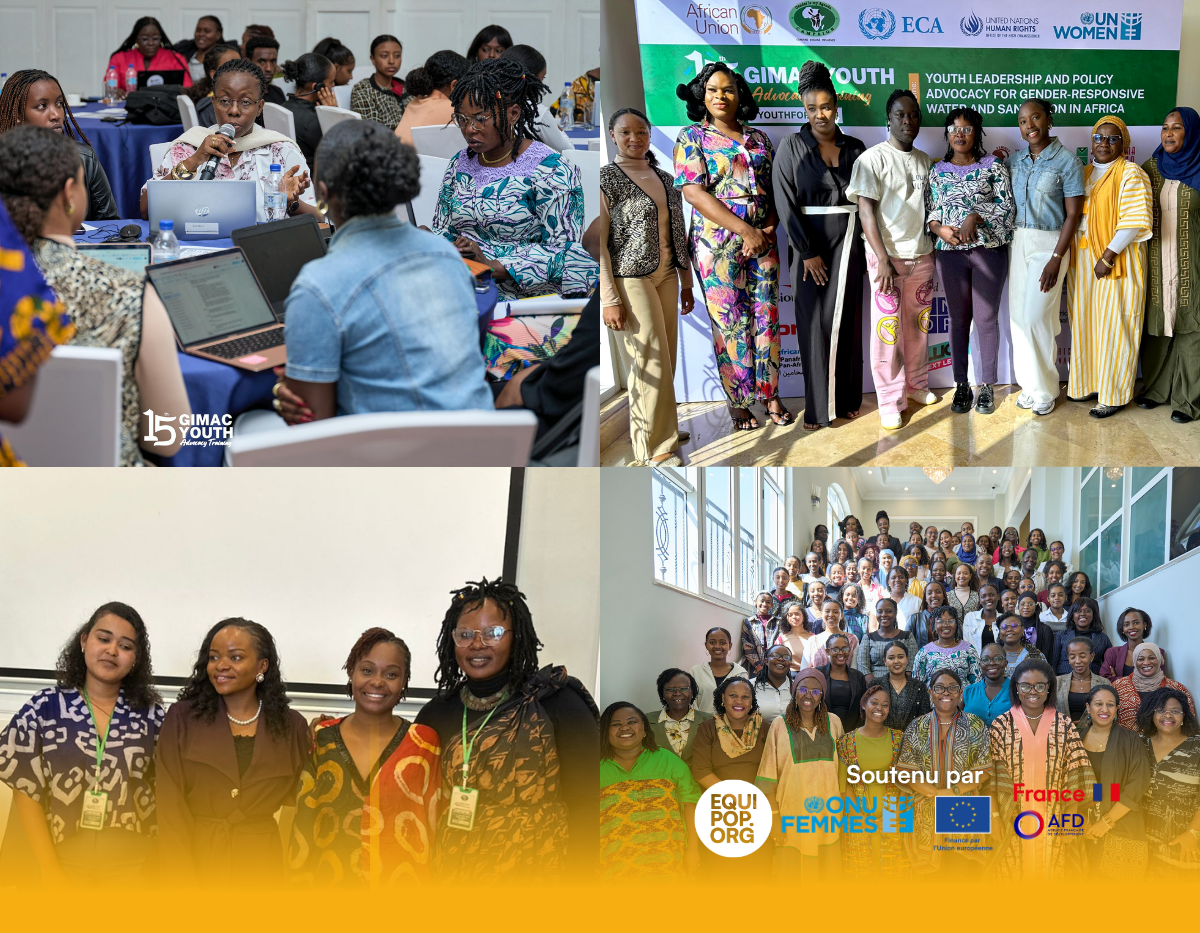
For the first time, Equipop participated in this event. Going far beyond mere institutional representation, our delegation reflected a clear commitment: to engage with regional forums to bring a feminist and intersectional perspective to the issues at hand, by exploring the many dimensions of the central theme of the 42nd edition of GIMAC—water, sanitation, and hygiene (WASH)
Water and sanitation at the heart of the AU’s annual theme
The 39th African Union (AU) Summit, held in Addis Ababa on February 14 and 15, 2026, took place against a backdrop marked by ongoing security crises, armed conflicts, and tensions surrounding multilateralism. On this occasion, UN Secretary-General António Guterres hailed the African Union as a “bastion of multilateralism” and called for strengthening partnerships with the continent.
Above all, heads of state and government have made water and sanitation a continental political priority by officially launching the theme for 2026: Ensuring the sustainable availability of water and safe sanitation systems to achieve the goals of Agenda 2063. This priority comes at a time when more than 400 million people in Africa still lack access to a safe source of drinking water and more than 700 million lack adequate sanitation services.
For Évariste Ndayishimiye, the new AU Chairperson for 2026, this theme is neither abstract nor symbolic: its implementation must serve as a strategic pillar for all member states.
Beyond these announcements, several key messages emerged from the summit. The African Union was reaffirmed as a central actor in governance and peace on the continent, although its limitations in the face of persistent conflicts and humanitarian crises were also highlighted. In this context, water resources and access to safe WASH services were presented as fundamental issues for social stability, conflict prevention, and community resilience.
Amplifying the voices of French-speaking Africa on the continental stage
In line with its advocacy objectives, Equipop is building its presence within African institutions to strengthen its influence, position its partners in Francophone Africa as legitimate and committed actors in continental advocacy forums, and promote the integration of feminist analyses into resolutions and mechanisms. With this in mind, Equipop’s work aims to (re)prioritize gender equality and SRHR in public policies, legislative frameworks, and public discourse in West Africa; to strengthen the effective representation of women, youth, and marginalized groups in decision-making spaces at the national, regional, and multilateral levels; to promote access to information and the enforcement of existing rights; and finally, to support the strengthening of collective feminist advocacy at all levels, from local to international.
Although the African continent is home to numerous continental platforms dedicated to civil society, GIMAC—a network of African women’s and civil society organizations launched in 2002—has gradually established itself as a pillar of the African women’s movement and the promotion of gender equality, particularly through the implementation of key regional and international instruments on equality. GIMAC thus serves as a strategic platform for influencing the African Union. As a continental gender equality platform, GIMAC acts as an interface between civil society organizations and African decision-making bodies, formulating policy recommendations on women’s rights and gender equality, particularly in the lead-up to African Union Summits.
It was in this context that we participated in the 42nd edition of GIMAC alongside six activists representing Benin, Burkina Faso, Guinea, Mauritania, Niger, and Chad. Preliminary discussions identified the event as a strategic opportunity to strengthen the influence of feminist voices from West and Central Africa at the continental level, particularly those from Francophone countries. Being at GIMAC meant positioning ourselves where recommendations take shape, to ensure they reflect the needs and experiences of activists from French-speaking West and Central Africa and to open opportunities for continental alliances around gender equality issues. Far beyond mere institutional representation, our delegation embodied a clear commitment: to engage in regional forums to bring a feminist and intersectional perspective to the issues, by exploring the multiple dimensions of the central theme: water, sanitation, and hygiene (WASH).
Promoting a gender-sensitive approach to water, sanitation, and hygiene
Often perceived at first glance as a purely technical issue, politicizing WASH highlights the ways in which access to water directly impacts people’s health, menstrual dignity, security, peace, and fundamental rights—among other issues around which women, young people, and vulnerable populations are organizing and developing solutions. Ultimately, equitable access to water and sanitation is essential for the implementation of SRHR, the prevention of gender-based and sexual violence, and menstrual dignity, as well as for the peace, stability, and security of communities.
The advocacy messages developed through a collective subregional effort—notably via two online working sessions bringing together some fifty activists—inspired the statements made by the activists comprising the delegation. They promoted a feminist and integrated approach to WASH policies, highlighting structural inequalities in access to water and safe sanitation infrastructure, as well as their link to health and menstrual dignity, SRHR, violence prevention, and the Women, Youth, Peace, and Security agendas.
“SRHR are fundamental human rights, just like access to water and sanitation. They are essential for protecting people in vulnerable situations from gender-based and sexual violence.”
“Menstrual dignity is inextricably linked to the right to water, sanitation, and hygiene, as well as to gender equality. It is essential to the dignity, health, and citizenship of people who menstruate, helping to reduce factors that contribute to discrimination, insecurity, violence, and health risks.”
“Equitable and secure access to water, sanitation, and hygiene is a key issue for peace and security: when mismanaged, water resources fuel tensions and conflicts; when governed inclusively, with women and young people at the center of decision-making, they become a driver of social cohesion, community resilience, and lasting stability.”
[Click here to view the full document containing the advocacy messages Visual 42GIMAC2 FINAL.pdf]
Strengthening feminist advocacy on a continental scale
Finally, the added value of our participation lay at the intersection of an activist interpretation of the African Union’s annual theme and our facilitation of participation from West and Central Africa’s French-speaking regions, particularly from young activists and women activists from the Sahel. This approach made it possible, on the one hand, to highlight contexts and experiences that are both specific to and widely shared by women, girls, and marginalized people across different regions of the African continent, and, on the other hand, to help address the underrepresentation of young people as well as Francophone, Lusophone, and local voices in continental advocacy spaces.
In this context, we are continuing our partnership with GIMAC, building on the strategic meetings held during the 42nd pre-summit, and ensuring that the mechanisms are in place to incorporate the final recommendations and advocacy messages put forward by our activists into GIMAC’s final document, as well as to convey them to the relevant bodies of the African Union.
In this regard, Equipop reaffirms its commitment to amplifying the voices and priorities of Francophone feminist activists in West and Central Africa and to strengthening collective feminist advocacy at all levels.