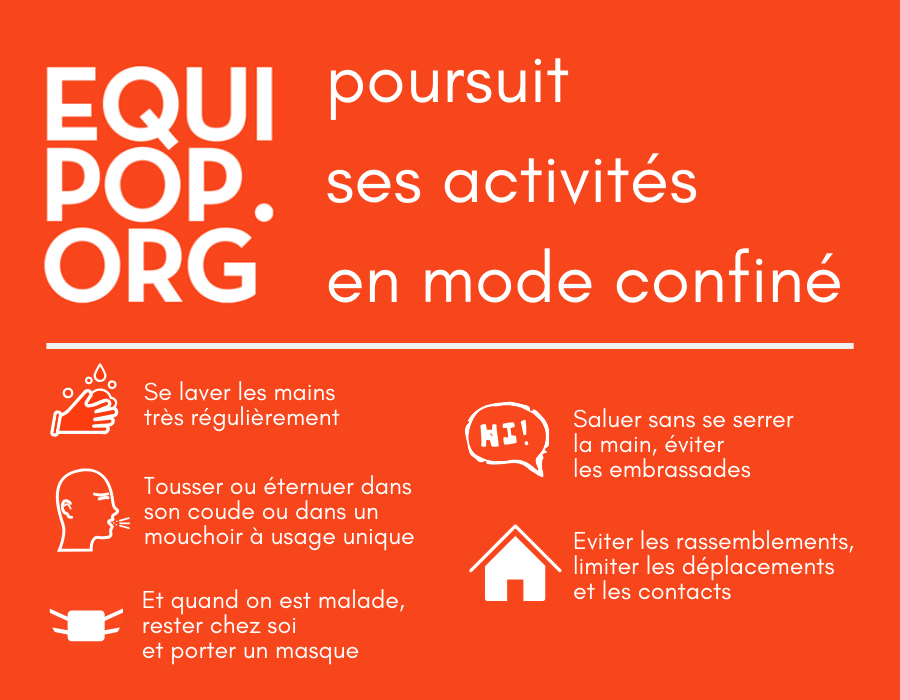
Like any organization, Equipop has been significantly impacted by COVID-19. However, we are in a unique situation, as half of our teams are based in France and half in several West African countries.
All of our employees, regardless of where they live, have been working remotely since last week. We have postponed all travel and canceled events and activities involving the public for the coming month. We are in close contact with the fifty or so partners with whom we collaborate, inviting them to take the same measures and working together to find the best way to ensure business continuity and, where relevant, to contribute to the global crisis we are facing and the specific challenges it raises.
Inequalities accentuated in times of crisis
We know that vulnerabilities are exacerbated in times of crisis and are compounded by stress, loss of income, and inequalities in the contribution to domestic chores and caring for the sick. The poorest people struggle to access information and health services. Migrants currently on the road to exile or living in camps, shelters, or on the streets are seeing their living conditions worsen. The situation for populations in certain countries, such as those in West Africa where we have many partnerships, will be particularly difficult. If certain countries are faced with the spread of the pandemic, will their health systems be able to cope? How can protective measures be implemented in areas where access to water is limited? Furthermore, how can citizens reconcile lockdown measures with the need to ensure their daily survival?
Furthermore, we sorely lack a response that takes into account the specific needs of women in this situation, even though previous health crises, such as Ebola and Zika, have shown us that they further exacerbate gender inequalities (see the Lancet article "Covid-19: the gendered impacts of the outbreak"). Women and children, who are the primary victims of domestic violence, suffer more from lockdown measures. Access to sexual health and contraception services becomes even more complicated for many women and young people. Women, who are the primary caregivers, are particularly exposed to the pandemic, yet they are only marginally involved in decision-making and consultation processes.
Continue advocacy
The current situation highlights the need for massive investment in strengthening health and social protection systems, ensuring that gender issues are integrated into the process. This has long been identified as a priority by many associations. Equipop will therefore continue to promote this message at a time when very important budgetary decisions are likely to be made.
The momentum towards gender equality will, in fact, be slowed down. The Generation Equality Forum, scheduled to take place in Paris in early July, will not be able to be held under the conditions envisaged until now. Given the context, it is all the more important to ensure that the mobilization of civil society and states does not waver.