
Depression, chronic fatigue, and loss of motivation: activist burnout is a reality that must be taken seriously in order to improve activists' well-being. Equipop and the Network of Young Feminists of West Africa devoted the third meeting of the "Sororités francophones" cycle to the issue of activist burnout.
"From the moment we become feminists, we are a threat to the patriarchy, and therefore we are in danger," says Tunisian activist Ahlem Bousserwel. When feminists speak out publicly, they become levers of social change and potential targets of resistance to that change, and therefore of harassment, particularly on social media.
Senegalese psychologist Aminata Libain Mbengue reports numerous testimonies from feminists on social media expressing their exhaustion and the difficulties they encounter in their activism. She herself has been the target of cyberbullying. For her, violence is a tool in the patriarchal arsenal to silence activists and their interventions.
Activist burnout can be exacerbated by multiple factors that affect feminists and cause them to feel guilty when they try to take a step back:
- physical or psychological violence;
- stereotypes ingrained in our societies;
- overwork within associations and organizations;
- saturation of requests for assistance and testimonies from survivors of violence.
On April 13, 2022, three feminist speakers enriched the Sororités francophones meeting dedicated to activist burnout by sharing their experiences.
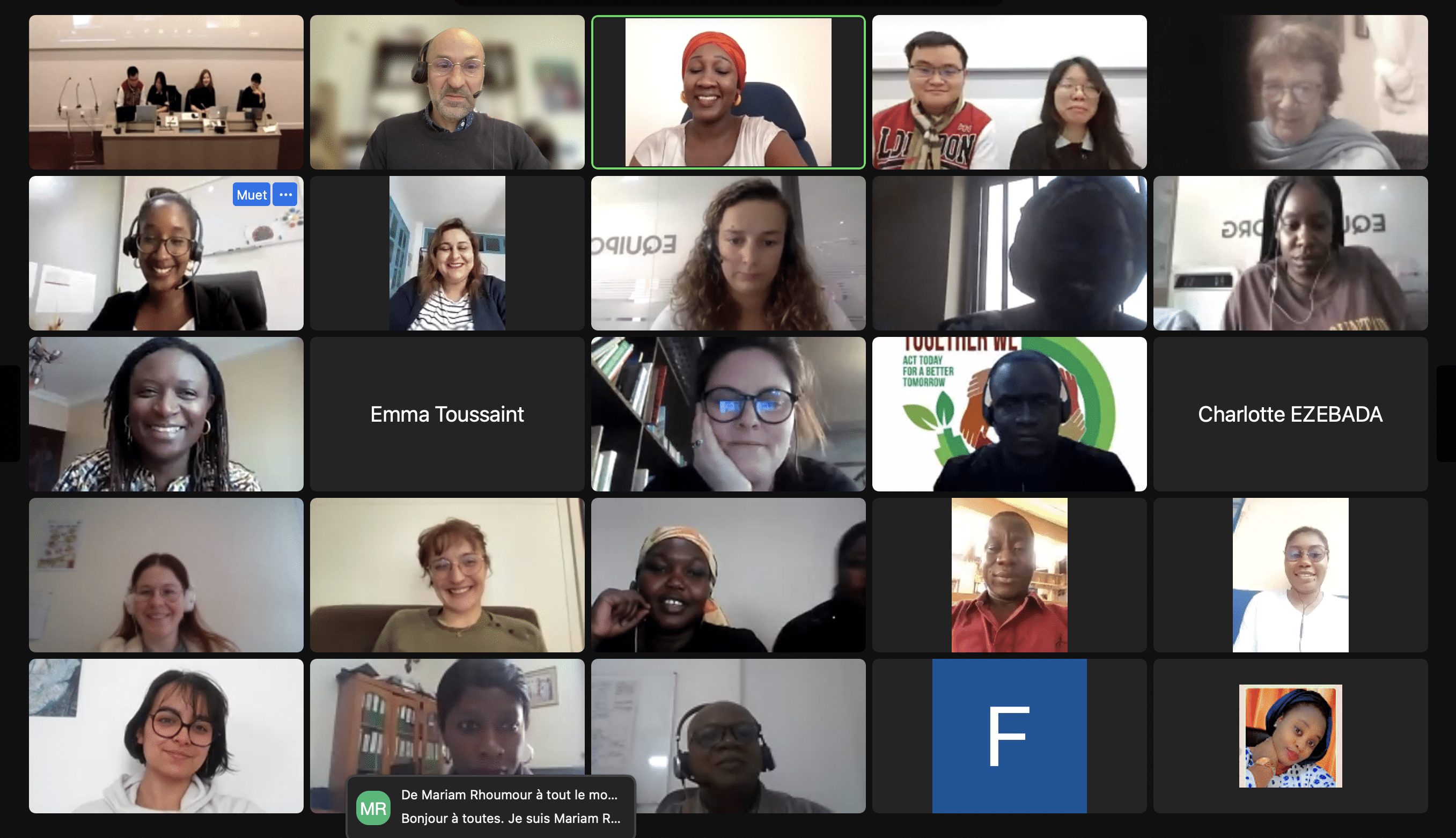
- Aminata Libain Mbengue is a clinical psychologist from Senegal. As a professional, she has implemented initiatives to support feminist activists.
- Ahlem Bousserwel is a Tunisian activist Tunisian and currently serves as secretary general of the Tunisian Association of Democratic Women (ATFD).
- Marie-Renee Nwoe is a Cameroonian psychologist and activist specializing in gender and sexuality issues.
Recognizing the signs of exhaustion
Feminists are often victims of double exhaustion. First, psychological exhaustion, because they feel that their actions are futile and experience vicarious trauma. Second, physical exhaustion, because they have an immense workload that leads to a loss of energy. This exhaustion, which can have significant consequences on the mental and physical health of activists, can be identified by a few signs. According to Marie Renée Nwoes, a Cameroonian psychologist, these signs vary from one activist to another, but often include demotivation, stress, and illness. If the person suffering from exhaustion is unable to talk about it or recognize it, it is important for everyone to be attentive to others and to be able to raise the alarm.
Sisterhood to counter activist burnout
“The first material we work with as feminists is our own experience, our own history. We must identify our limits.". As Aminata Libain Mbengue explains, one of the first steps in combating burnout is to identify your own limits in relation to your personal history and to share them with your feminist sisters. Marie-Renée Nwoes also recommends that exhausted activists identify the issues they feel comfortable with, take action, help other activists, and let go.
Another key is to allow yourself to take a step back and impose breaks on yourself, and thus "get out of that feeling of being alone in the world by sharing with our sisters," as Aminata Libain Mbengue illustrates. To do this, it is important for feminists to realize that this is a collective struggle and cannot be fought alone. By working in groups and connecting with other associations and feminist collectives, feminists can take turns, share the workload, and collectively bear the burden of an energy-intensive feminist struggle.
Feminists can also collectively create mechanisms for support and rejuvenation, particularly by using women-only feminist spaces that are welcoming and safe. In these spaces, they can both confide in each other about their difficulties and seek lightheartedness, allowing themselves to enjoy themselves. Ahlem Bousserwel explained that in Tunisia, "We need to strengthen this sisterhood to recharge each other's batteries and develop a common will." To this end, Tunisian activists use mechanisms such as solidarity-based listening and supervision between activists with varying degrees of experience. Sisterhood becomes an essential tool in the struggle, enabling activists to persevere in the long term.
The Sororités Francophones lecture series is inspired by a first edition that took place on June 23, 2021, during the Feminist World Tour, ahead of the Generation Equality Forum (GEF). The initiative was taken by Equipop and the West African Young Feminists Network was born out of a desire to create a space dedicated to reflection on feminism and sisterhood. The meetings provide an opportunity to address a wide range of topics by comparing different experiences and life stories. The aim is to enrich knowledge about multidisciplinary and intergenerational feminism. The idea is to create a support network and to pool the reflections of the various participants.
This project receives financial support from AFD and Global Affairs Canada.