Throughout the 16 Days of Activism Against Gender-Based Violence, Equipop interviews its partners about their actions to combat gender-based violence.
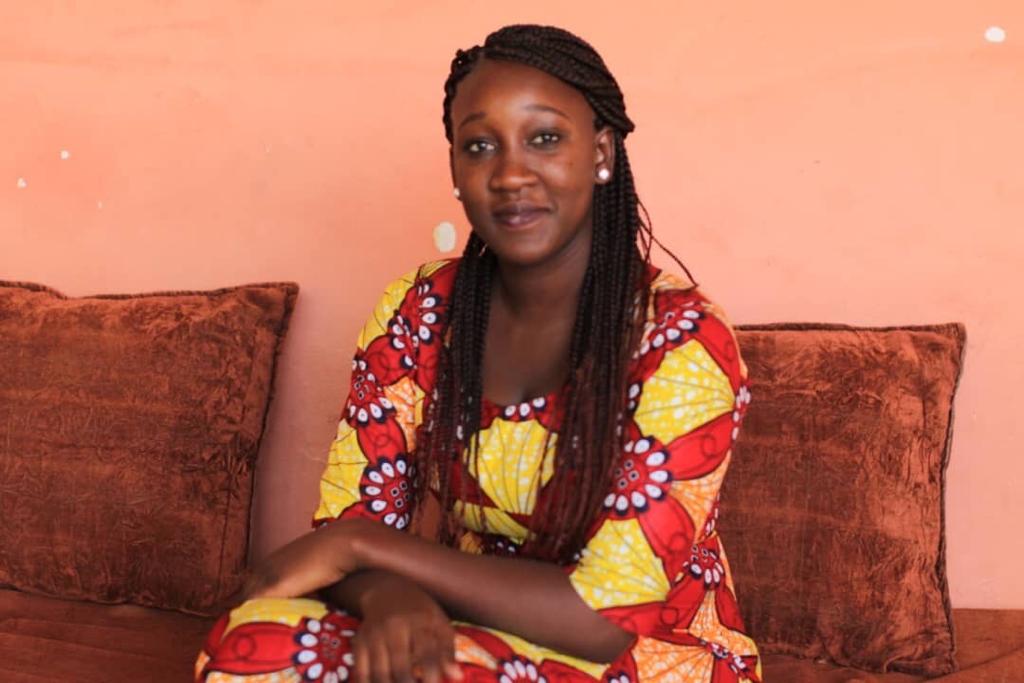
A member of the Voices of Women in Mauritania collective and the Network of Young Feminists in West Africa, Dieynaba NDiom campaigns for legislation to formalize the fight against violence against women in Mauritania.
Could you explain the issues surrounding gender-based and sexual violence in Mauritania?
The big issue right now is the legal framework. Recently, the Mauritanian government itself, through the MASEF (Ministry of Social Affairs, Children, and Family) and the Ministry of Justice, proposed a bill on violence against women and girls. It was adopted by the Council of Ministers and was to be presented to the Assembly for a vote. But in the meantime, there has been strong pressure from certain political parties and Islamists. They accuse it of being anti-Islamic, even though it has already been scrutinized by the Ministry of Islamic Affairs. They believe that this law would lead to moral decay, prostitution, etc. This counter-campaign blocked the process of adopting the law: the government backed down. We, the feminist and human rights associations in Mauritania, believe that the law is far from complete in terms of our needs. But it is an essential first step in regulating issues related to violence against women and girls.
In 2020, there was an increase in calls from women victims of violence. The murders of women made headlines in Mauritania. Despite this and the mobilization of associations, the state did not have the courage to present this bill to the Assembly.
What concrete steps are you taking to promote the adoption of the bill?
Together with the collective Voix des femmes en Mauritanie (Women's Voices in Mauritania), we are running a digital and media campaign. We are highlighting the need for this legal framework, in particular through video interviews on the topics covered by the bill—female genital mutilation, sexual harassment, domestic violence (even if the latter is not directly mentioned)—in Arabic, French, Pulaar, Soninke, and Wolof. We want to make our messages, as well as the bill, accessible to as many people as possible. That is why we have translated and explained the law in the four national languages, something that even the relevant ministries had not done. We are also preparing podcasts to communicate on the issue.
Voix des femmes also provides spaces for women to express themselves. Given the current health situation, we are working digitally. During the 16 Days of Activism, I am participating in numerous online panels and debates on major issues related to violence against women in Mauritania and the sub-region.
How can a law help improve the daily lives of Mauritanian women?
The law alone is not enough. But it would provide a legal framework. Today, people who file complaints are faced with judges who have no specific laws on violence against women to rely on. In Mauritania, a woman who is the victim of rape is more likely to be sentenced to prison than the perpetrator. She will be accused of Zinâ (consensual sexual intercourse outside of marriage) – particularly because rape is not clearly defined in Mauritanian law. There is a political will behind this lack of punishment for perpetrators of violence: the Mauritanian administrative system is very patriarchal and legitimizes certain forms of violence, such as domestic violence. Of course, there is also a lot of work to be done on education, gender equality, combating patriarchy, and many other areas that will lead to an egalitarian society.
We must continue our efforts, in every country, to create a society where every human being—regardless of their needs and diversity—can thrive. When we achieve this, we will live better and more peacefully.