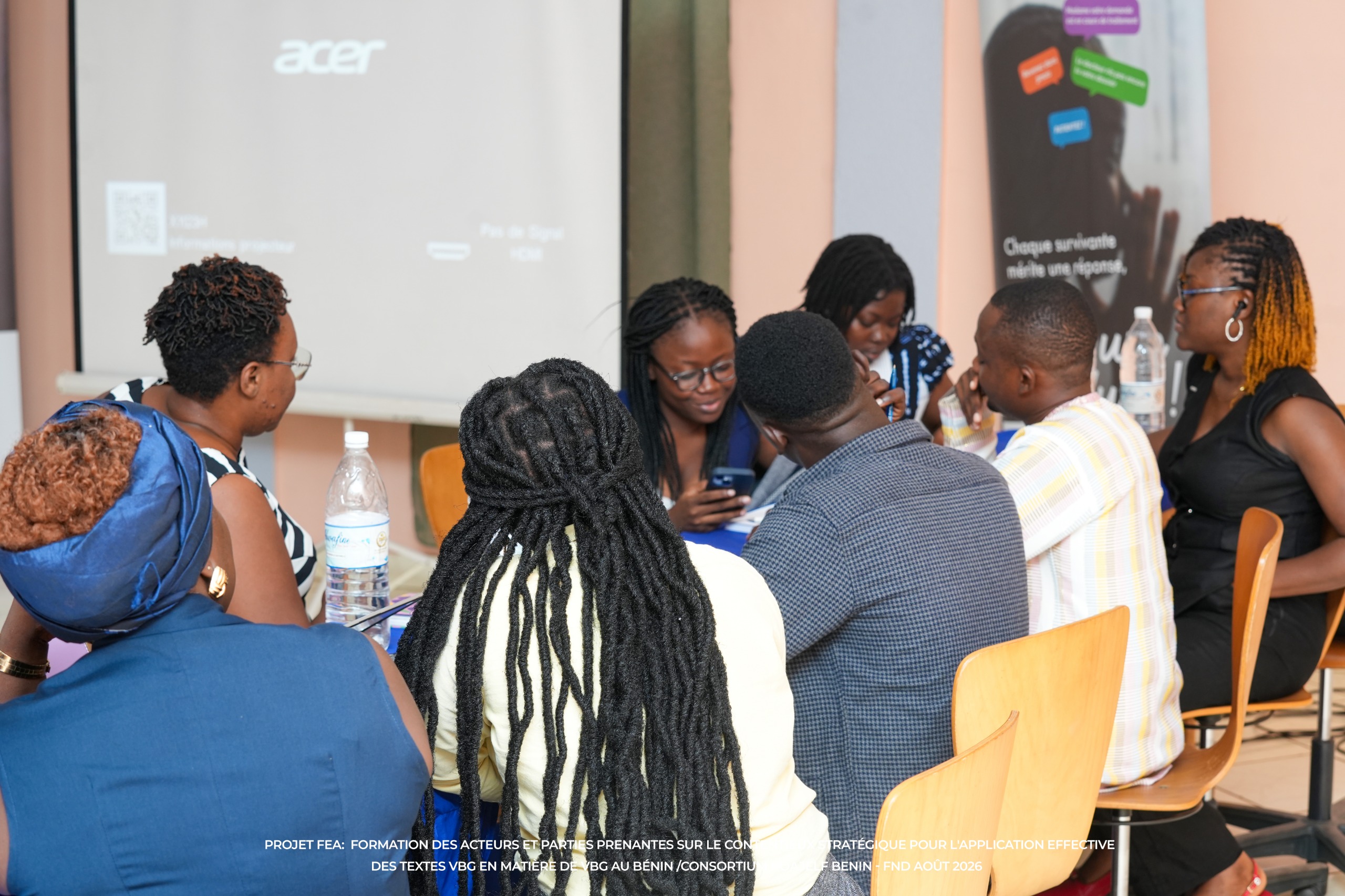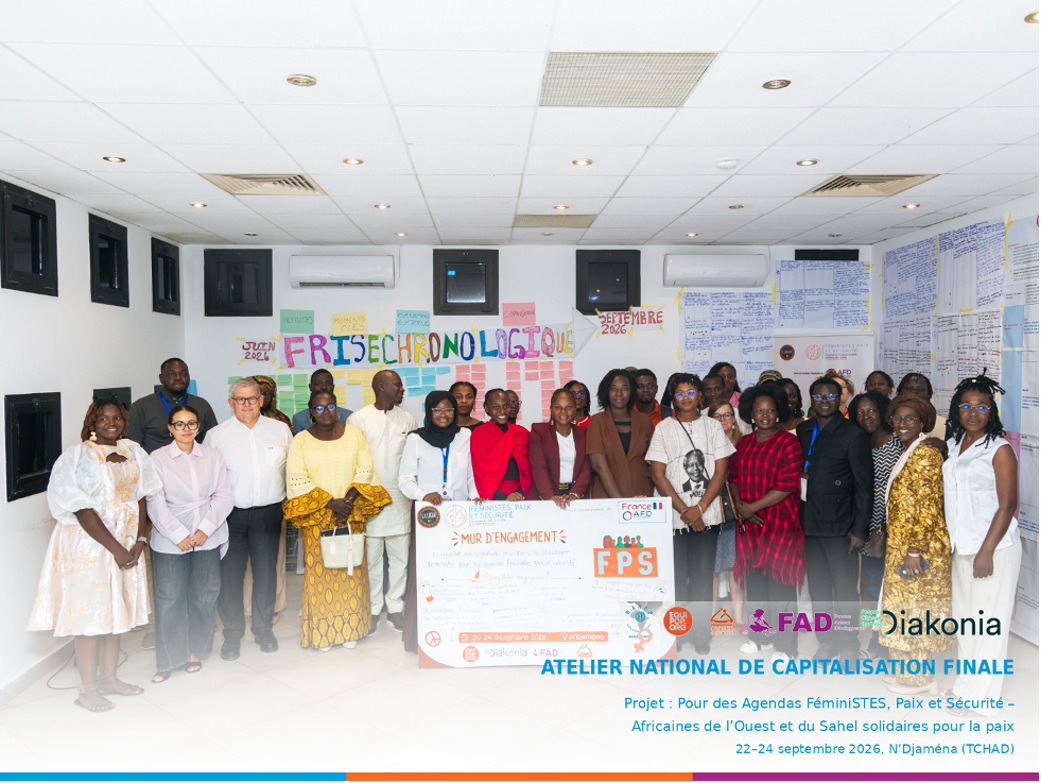
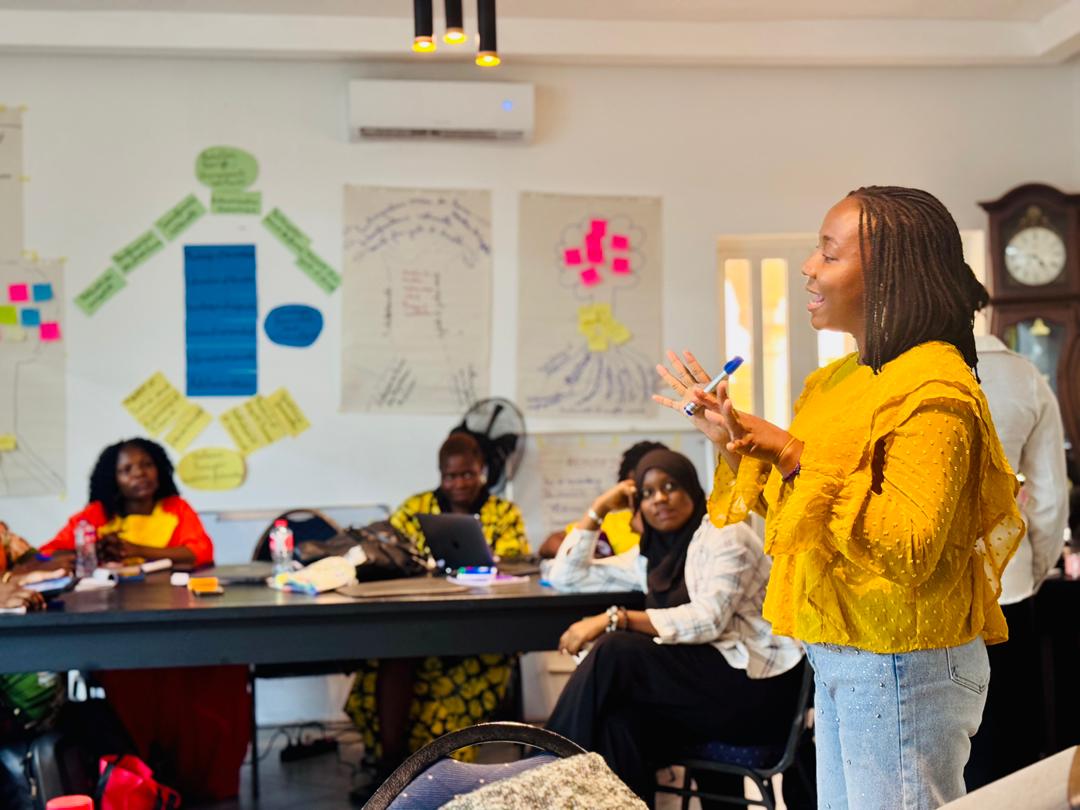
On November 20 and 21, 2025, the MGA Residence in Ouidah hosted a training workshop for trainers on feminist approaches, as part of the project "For Feminist Agendas for Peace and Security in West Africa and the Sahel in Solidarity for Peace". Over two days, 23 representatives of feminist organizations, youth networks, and activist movements gathered to revisit their practices, refine their analyses, and jointly develop strategies to strengthen the implementation of the Women, Peace, and Security (WPS) and Youth, Peace, and Security (YPS) agendas from a resolutely feminist perspective.
In a regional context still marked by security crises, gender-based and sexual violence, and the rise of anti-rights movements, this workshop is part of an ongoing regional effort to empower activists, particularly young people, so that they can influence decision-making spaces, raise the profile of their initiatives, and transform the norms and structures that perpetuate gender inequalities.
A participatory methodology rooted in activist realities
Co-facilitated by Gorée Institute, Equipop, Filles en Action, AJEF, and JRA, the workshop employed participatory methods based on collective intelligence and the sharing of localized knowledge.
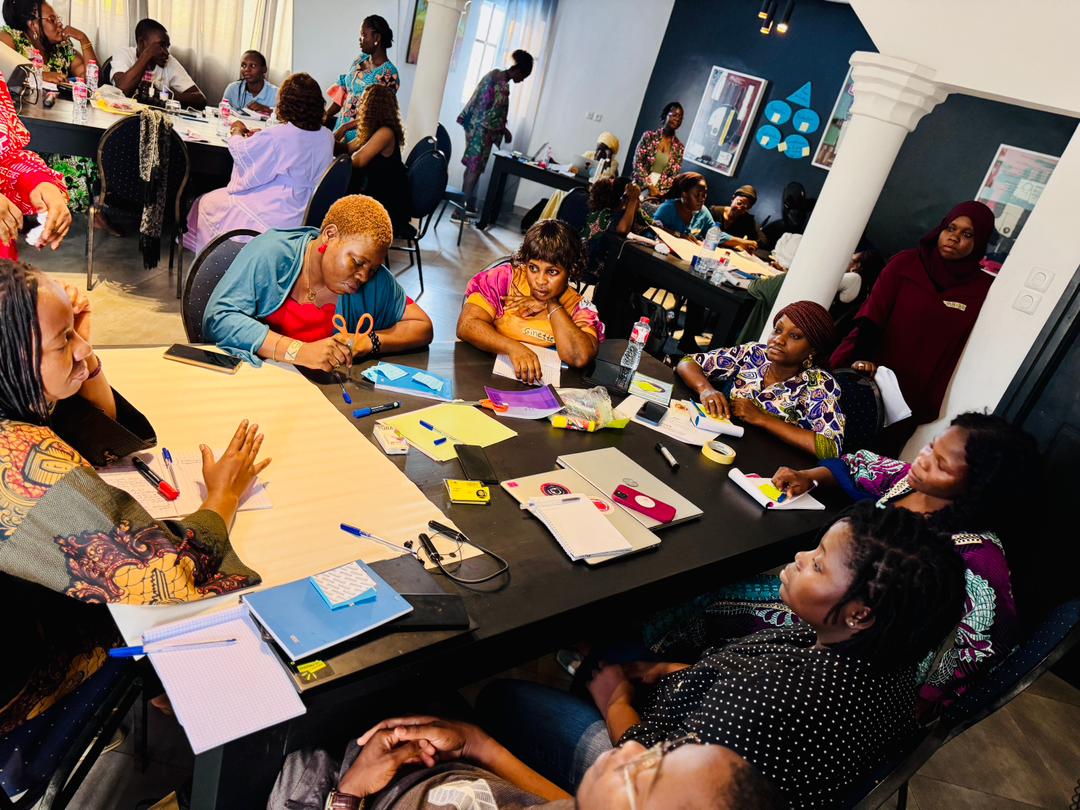
In an attentive and inclusive atmosphere, participants co-constructed the rules of operation, established a secure framework for exchange, and laid the foundations for collective reflection informed by the experiences, contexts of intervention, and realities specific to feminist organizations in Benin.
Revisiting the fundamentals: identities, experiences, and institutional frameworks
The first day provided an opportunity to revisit the conceptual and political foundations of the FPS and JPS agendas, while taking a critical look at their limitations and blind spots. Through identity and intersectionality analysis exercises, participants explored how their identities—gender, age, origin, community role, social status—influence their experiences of conflict, engagement, and security.
These discussions paved the way for a rare opportunity to share experiences and listen empathetically, where experiences related to violence, discrimination, and structural barriers were identified and acknowledged. This deeply human sequence strengthened sisterhood and consolidated a sense of belonging within the group.
In the afternoon, the collective construction of the "flower of power" provided an opportunity to examine the different forms of power mobilized in feminist actions: power of, power with, power within and to reflect on their implications in community and institutional dynamics.
The day concluded with an analysis of national legal frameworks relating to peace and security agendas in Benin, highlighting progress, persistent challenges, and opportunities to strengthen the institutionalization of feminist approaches.
Feminist approaches to transforming action and spaces of power
The second day began with an introduction to feminist approaches, their historical and political roots, and the backlash dynamics that aim to undermine the achievements of rights movements in West Africa. Participants revisited the fundamental concepts of sexism, stereotypes, empowerment, and positive peace, and explored contemporary resistance from anti-rights movements, which are increasingly active in the region.
Using a problem tree, participants identified specific obstacles encountered in Benin in feminist action for peace: the weight of patriarchal norms, low representation, structural violence, lack of resources, and the instrumentalization of security discourse. The discussions enabled the participants to outline concrete strategies to counter these obstacles, strengthen alliances, raise the profile of initiatives, and support the engagement of young women in peace processes.
The afternoon was devoted to simulations of training sessions, a key step in preparing for the cascade of feedback planned within organizations and communities. These role-playing exercises helped refine teaching approaches, strengthen communication skills, and anticipate challenges in the field.
A space to consolidate alliances and prepare for the future
Beyond the tools and theoretical content, the workshop provided a space for solidarity and mutual support. Discussions, experience sharing, and moments of listening helped forge lasting bonds between feminist organizations, youth collectives, and movements committed to social transformation.
Organizations present: Filles en Action, the consortium [Fondation des jeunes amazones pour le développement (FJAD), Havre de Paix, Institut Tonafa], Rescue and Hope, Réseau Paix et Sécurité pour les Femmes de l’Espace CEDEAO/Bénin (REPSFECO), Association Barika, West African Network of Young Women Leaders – Benin (ROAJELF-Benin), Yonba, Young Mediators of Benin (JMB), Jeunesse Regard et Actions (JRA), Association des Jeunes des Espaces Frontaliers du Bénin (AJEF-Bénin) and West Africa Network for Peacebuilding (WANEP-Bénin)expressed their commitment to continuing this work, spreading feminist approaches in their communities, and continuing to defend spaces of peace, justice, and equality.
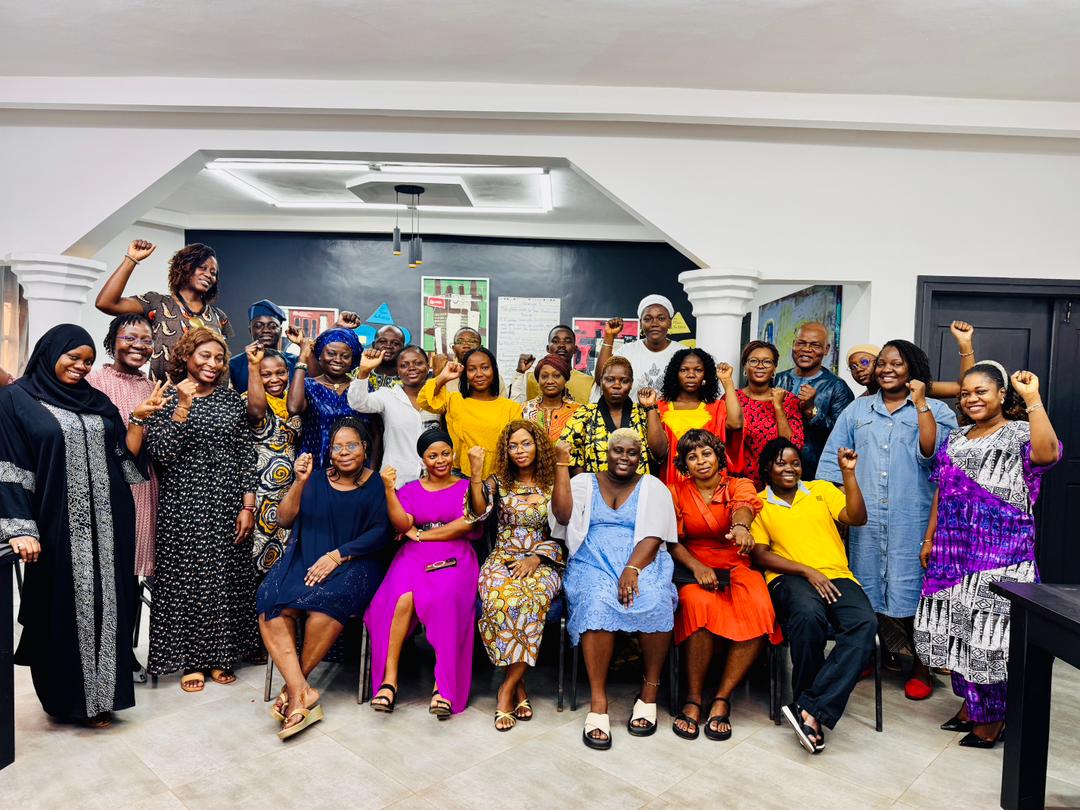
With the support of the EQUIPOP–DIAKONIA–FAD–GORIN consortium, the partners reaffirmed their commitment to ensuring that their actions are informed by a feminist, intersectional, and contextualized perspective. Over the course of two days, an important milestone was reached: that of collective reinforcement in the service of sustainable transformation, driven by voices determined to change practices, institutional frameworks, and local dynamics towards greater equality and peace.