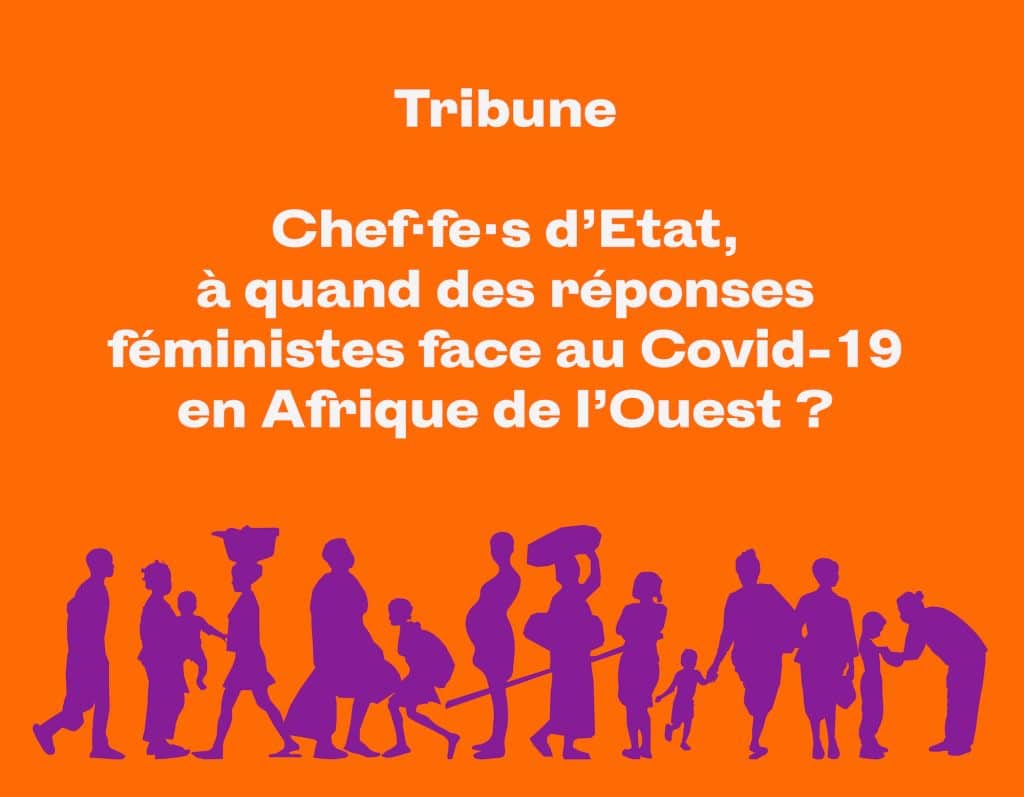
Tomorrow, heads of state from around the world were due to gather in Paris for the Generation Equality Forum to celebrate the 25th anniversary of the Beijing Conference, a historic turning point for women's rights worldwide. The aim of the Forum was to "launch a set of concrete, ambitious and transformative actions" in favor of gender equality. The Forum has been postponed for a year due to the health crisis. However, between now and summer 2021, countries must not lose momentum. On the contrary, these issues, which have been put to the test by the Covid-19 crisis, appear even more relevant, particularly in Africa.
Disproportionate impact on women and girls
Even though the African continent seems to have been relatively spared by the wave of the virus, avoiding the predicted "massacre," this crisis, like all other health crises, has a disproportionate impact on women and girls.
We, feminist activists from French-speaking Africa, are both active in the fight against COVID-19, in prevention and social and health care, and direct observers of the alarming situations experienced by women and girls. We took part in a survey launched by Equipop among some 30 organizations in seven countries (Benin, Burkina Faso, Côte d'Ivoire, Guinea, Mali, Niger, and Senegal) to document the impacts of the crisis. Here is our analysis.
Situations of inequality
The crisis has exacerbated inequalities at all levels. Violence against women has increased significantly with isolation: economic violence, physical violence, but also psychological violence, which takes the form of insults or threats of repudiation, for example. The domestic burden—cleaning, cooking, laundry—already largely shouldered by women, has been increased by lockdown. It is mainly women who have been responsible for monitoring their children's schooling, and it is women and girls who find themselves overexposed in markets and public places every day, without protection or the possibility of social distancing. It is women, again, who are in direct contact with the sick, within the family or in their professional activities, as nurses, nursing assistants, and doctors. According to the World Health Organization (WHO), "globally, 70% of health and social care workers are women." In several countries, health care provision, particularly in the area of sexual and reproductive health, including maternal care and HIV/AIDS screening, has been neglected or even abandoned.
Beyond these immediate effects, we warn of the longer-term consequences of the crisis. How many unwanted pregnancies will there be in the coming months due to the obstacles women face in accessing contraception? How many complaints of gender-based violence will be dismissed due to a lack of accessible courts? How many millions of households will be affected by the economic recession? How many associations will no longer be able to maintain their prevention, awareness-raising, and basic service provision activities for young people and adolescents? What are the consequences of the resurgence of moralizing and conservative discourse on young people's sexuality, promoting abstinence and blaming women, which we have seen since the beginning of this crisis? There is a real risk of regression in terms of gender equality and sexual and reproductive health and rights.
For real changes in power relations
If these inequalities between women and men continue to shape our societies to such an extent, it is partly because public policies have not identified all the levers for change. Women remain underrepresented in decision-making bodies at all levels.
Our survey shows that civil society will play a major role in the resilience of societies in the post-COVID-19 era. As France prepares to mark the symbolic launch of the Generation Equality Forum tomorrow with a digital event on the role of women in the face of Covid-19, we ask: are governments ready to work with us, feminist activists in civil society, to bring about real change in power relations?
Signatories of the opinion piece:
ACHADE Pulchérie, Executive Director, Organization for Service and Life (OSV/Jordan)-Benin; ADJA Roland, Executive Director, National Organization for Children, Women, and Families (ONEF)-Ivory Coast; AGBESSI, Rolland Executive Director, Beninese Scouting-Benin; APATA Sylvia, Executive Secretary, Organization of Citizens for the Promotion and Defense of the Rights of Children, Women and Minorities (CPDEFM)-Côte d'Ivoire; BOKO Odile, President, Beninese Association for the Promotion of Sustainable Development (ABeProD)-Benin; BOKOSSA Hermine, President, Young Volunteers for Health (JVS)-Benin; CISSEE Salimata, Country Director, Marie Stopes Senegal-Senegal; DEMAUD Kamiénouin Alphonsine Ella, President, Urban and Rural Health NGO (ONG SUR)-Ivory Coast; DIALLO Djenebou, Advocacy Officer, UCPO (Ouagadougou Partnership Coordination Unit); HAIDARA Mohamed, Coordinator, SongES-Niger; KABORE Wendyam Micheline, Executive Director, Pananetugri Initiative for Women's Well-being (IPBF)-Burkina Faso; KONATE Kadiatou, Secretary General, Club de Jeunes Filles Leaders de Guinée (CJFLG)-Guinea; KOULA Etienne, Advocacy and Communication, SOS/Jeunesse et Défis (SOS/JD)-Burkina Faso; NDIAYE Mody, Program Director, NGO JED des Eclaireuses et Eclaireurs du Sénégal-Senegal; NDIONE Zipporah, President, West African Network of Young Women Leaders (ROAJELF-SENEGAL)-Senegal; SEMBENE Thiaba, Program Officer, Siggil Jigeen Network-Senegal; SETHO Hugues Pascal S., Coordinator, ABMS/PSI-Benin, TOHOURI Marie-Laure, Project Manager, MESSI (Youth Mission for Education, Health, Solidarity, and Inclusion)-Ivory Coast; ZIKA SOMBEIZE, Halimatou, President, Niger Young Women Leaders Unit-Niger
The full survey, "Women's rights and health in the face of COVID-19: testimonials and feminist perspectives from West African civil society," is available online in PDF format on the Equipop website.