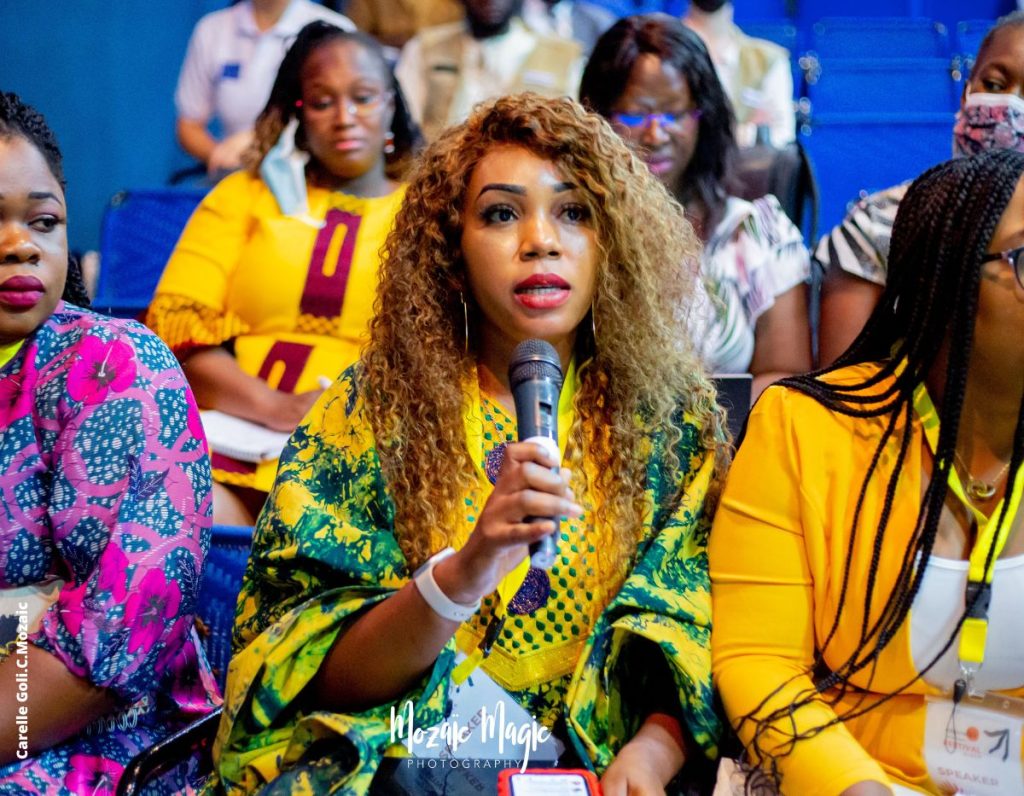
During the Femmes et Climats festival organized by Empow'her in Niger, Equipop had the opportunity in early 2022 to host a "Feminist Power Zone." Interview with Carelle Laetitia Goli, lawyer, blogger, and feminist activist who participated in this initiative.
The "Feminist Power Zone" was designed and implemented with a collective of around sixty feminists from West Africa, who were able to work online to plan several highlights. Over two days, five feminists appointed by the group attended the festival and led debates and working sessions on sisterhood, women's political power, and the history of feminist movements in Africa. Upon their return to their respective countries, they organized feedback sessions with their fellow activists.
How did feminists become involved in the Powerzone dynamic?
We were involved on two levels: during the preparation phase and on site. Ahead of the Power Zone, we worked collectively among feminists to select priority themes. These themes unite us as feminists in West Africa, as we experience the same realities and face the same challenges.
What facilitated this collective action?
What did you learn from this experience?
The first thing that stands out to me is everything we share as West African feminists. We share the same burdens, the same experiences, and the same challenges in terms of education. I also remember a very powerful moment of exchange with Ms. Hadari, a feminist "forerunner" and pioneer in Niger, during a session on women's participation and political power. We need to increase opportunities for exchanges of this kind with benevolent feminist forerunners and build intergenerational bridges.