In 2017, Equipop's advocacy, which seeks to link all levels from local to global, focused particularly on two priorities: taking young people into account and a decentralized approach.
In six West African countries, Equipop and its civil society partners are working to ensure that public policies focus on the health and rights of women and girls, and that significant budgets are secured. Undeniably, things are changing and commitments are being made, such as those made by Burkina Faso's Minister of Health, Professor Nicolas Meda, on behalf of the member states of the Ouagadougou Partnership for Family Planning at the FP2020 summit in London.
"We have three main commitments: political, by affirming
that family planning is a human right (...); financial, by committing to increase the budget supporting family planning programs by 10% per year per country until 2020; and programmatic, notably (...) by developing task delegation and improving the quality of services in countries."
Professor Nicolas Meda
Minister of Health of Burkina Faso
But as much as pushing officials to make commitments, Equipop's advocacy in West Africa consists of ensuring that these commitments are honored.
This advocacy must cover a wide range of topics to ensure a consistent approach, and it also focuses on areas that have a leverage effect and enable the necessary changes to be initiated more quickly: this year, the emphasis has been on taking young people into account and on "decentralization" (how and why to involve local authorities).

Sexual and reproductive health and rights of young people – A major subregional issue
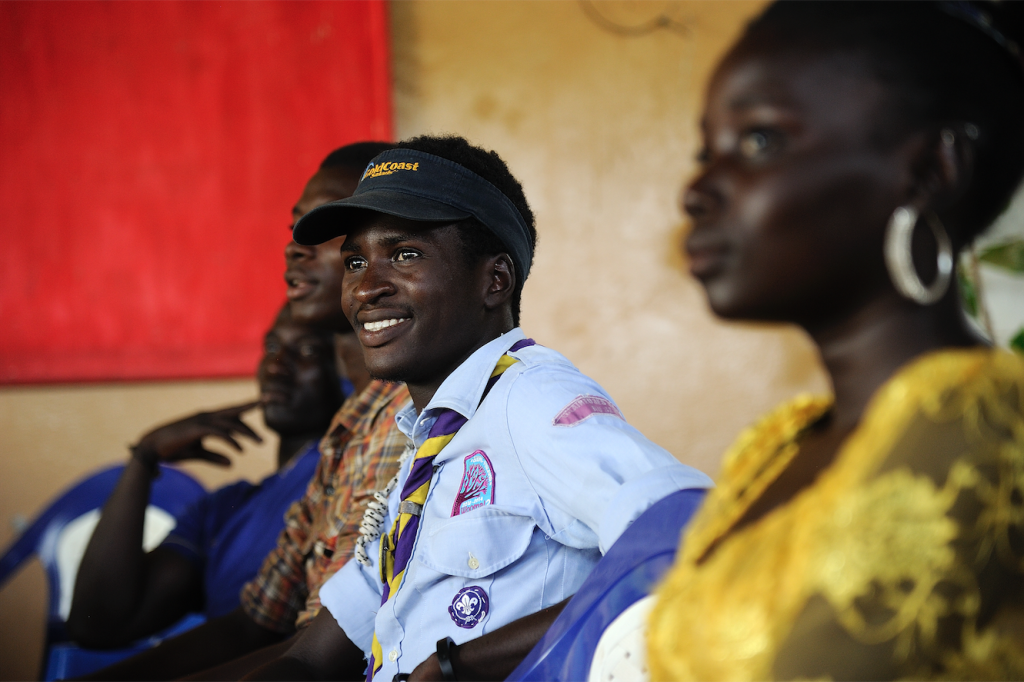
The six West African countries that are members of the Ouagadougou Partnership and partners in the London FP2020 summit all have predominantly young populations with very limited access to SRHR services (67% of the population is under 25, and nearly half is under 15). In response to this situation and thanks to advocacy efforts, national authorities have taken strong measures and developed programs to promote the sexual and reproductive health rights of young people:
- Taking their needs into account in plans to accelerate family planning in each country,
- Development of free family planning programs for young people,
- Introduction of comprehensive sexuality education in schools,
- Creation of national frameworks
- And participation in international consultation bodies for young people.

The major challenge now is to ensure that these programs are translated into action and bring about real change. This is one of the reasons why Equipop is particularly supportive of the work of youth associations and movements in West Africa.
Involve local authorities
After noting the absence of municipal authorities in promoting family planning, Equipop began advocacy efforts in collaboration with other civil society actors. The goal was to get them on board and involved in promoting family planning alongside national authorities. This advocacy work has been successful, and today in Burkina Faso, for example, many mayors are convinced and have made FP a priority in their municipal development plans. Between 2014 and 2017, 33 mayors allocated 1.36 billion CFA francs to FP services in their municipalities for women and girls of reproductive age! Beyond the increase in resources, which, although essential, remains modest, working with mayors allows for the creation of a pool of "champions" who, in turn, raise awareness of the importance of FP issues among citizens in their communities and other influential figures in their local and national networks. For Equipop and its partners, the aim is therefore to continue this work of raising awareness among mayors and to strengthen it by supporting them in mobilizing resources and defining and implementing actions in favor of FP and, more broadly, women's health and rights.

Of course, the decentralization process must not simply shift the problem from a higher level to a lower level. That is why Equipop is working to ensure that the approach is appropriate at all levels. The link between mobilizing political leaders and mobilizing citizens, which is essential in this regard, is achieved in particular through the Alliance Droits et Santé network of PF champions. Finally, advocacy efforts in each of the six countries are complemented by actions at the sub-regional level, and Equipop supports its West African civil society partners in gradually integrating themselves into central UN processes on women's and girls' rights and health issues.