In May 2017, with the presidential election, the French political landscape underwent a major upheaval. For Equipop, the challenge of this year of advocacy in France was therefore to ensure that the issues championed by the previous government did not disappear from the agenda. Equipop worked on two levels: political advocacy vis-à-vis the executive branch and, on a more technical level, contribution to institutional processes.
As France is a strategic partner for West African countries, thanks to its official development assistance and its voice on the diplomatic stage, Equipop has been committed since its creation to advocating with French politicians. A year ago, François Hollande's five-year term ended with the "Paris Pledge" for women's rights, with notable advances in terms of the visibility of sexual and reproductive health and rights (SRHR), but also the end of the "gender and development" strategy.
I want young girls to have the choice, if they wish, to continue their education [...], not to be married at 13 or 14 and start having children [...]. We must have this responsible, robust debate about freedom of choice, which goes hand in hand with democracy.
Emmanuel Macron
, President of the French Republic
To ensure continuity, the first step was to raise awareness among the members of the new executive. In early September 2017, at the first meeting of the five-year term with NGOs, Equipop called on Emmanuel Macron to defend women's rights internationally. The President of the Republic then stated that he would make this a priority—a general commitment that then needed to be clarified. Equipop therefore continued this awareness-raising effort throughout the fall, based on the publication of a position paper entitled "Maximizing the impact of French engagement in the Sahel: the leverage of SRHR."

Gender, health, and education: three institutionalized priorities
On November 28, 2017, in Ouagadougou, the French president gave his first major speech on relations between Africa and France. After the controversy he had created by mentioning the number of children per woman in West Africa in July during the G20 summit, he was eagerly awaited by both the Burkinabe population and French development aid specialists. And indeed, Emmanuel Macron's words showed that the French vision had evolved towards an approach more focused on individual rights, particularly the freedom of young girls to choose their own destiny.
In early 2018, Equipop, notably through its seat on the National Council for Development and International Solidarity (CNDSI), worked with civil society to ensure that the presidential initiative was clearly reflected in institutional processes. On February 8, 2018, the conclusions of the first interministerial committee on international cooperation and development (CICID) of the five-year term made health, gender equality, and education three of the government's five priorities. Its preamble mentions the importance of mobilizing young people, both in France and in Africa. The main objective of this first year of advocacy was therefore achieved.

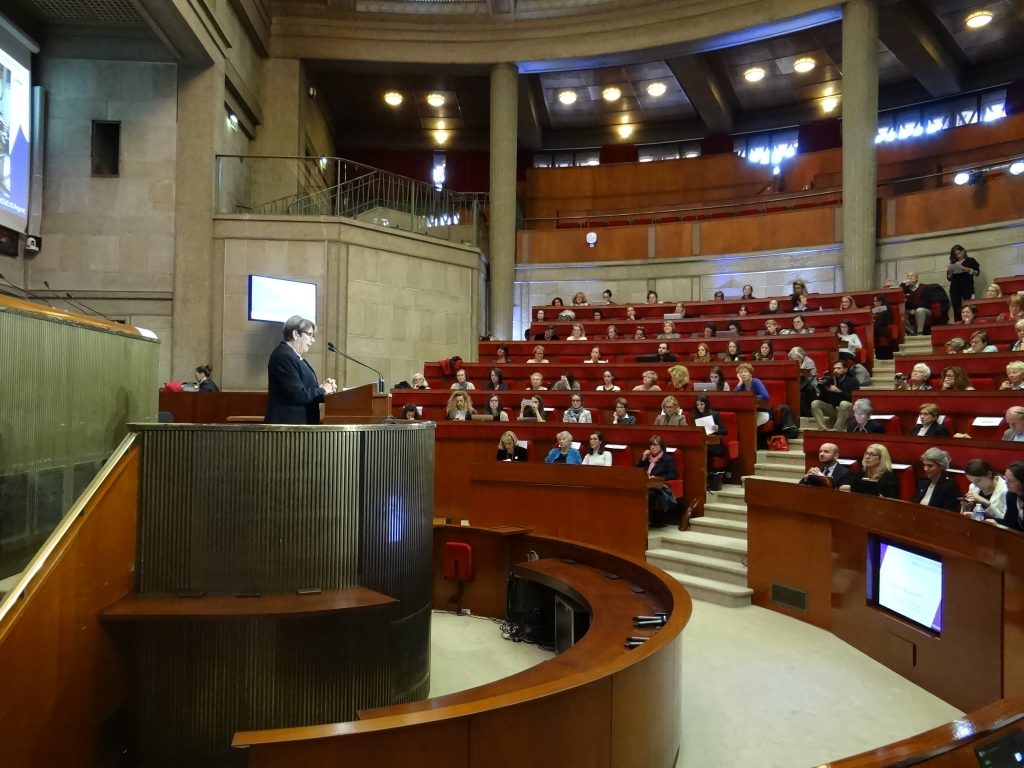
The next four years will obviously focus on implementing these priorities. Starting in 2017, Equipop sought to emphasize this aspect by initiating a broad civil society movement around a conference held at the CESE (French Economic, Social and Environmental Council) and a call to action entitled "To advance gender equality, France must invest in sexual and reproductive rights," signed by 250 organizations. In early 2018, Equipop also participated in three hearings of a parliamentary fact-finding mission that formulated 100 recommendations to the government "for feminist diplomacy."
Finally, after consistently advocating for the renewal of the "Gender and Development 2013-2017" strategy, Equipop contributed to the new strategy. Presented on March 8, 2018, France's "International Strategy for Gender Equality (2018-2022)" contains numerous improvements over the two previous versions. The vision appears more precise and the indicators more concrete. Another advance is that this 2018-2022 strategy extends to the whole of French foreign policy and no longer just to the field of development policy.
Quotes – SRHR in French strategies and publications