A participatory and engaging learning environment
In a context marked by persistent gender inequality, systemic violence, and conflict, strengthening the capacities of feminist actors remains an essential lever for transformative and sustainable action. With this in mind, the Diakona Consortium – Equipop – FAD – Gorée Institute, as part of the project "For Feminist Agendas, Women, Peace and Security," brought together partners, feminist activists, and members of civil society movements and organizations in Togo for a collective space for learning, critical reflection, and experience sharing.
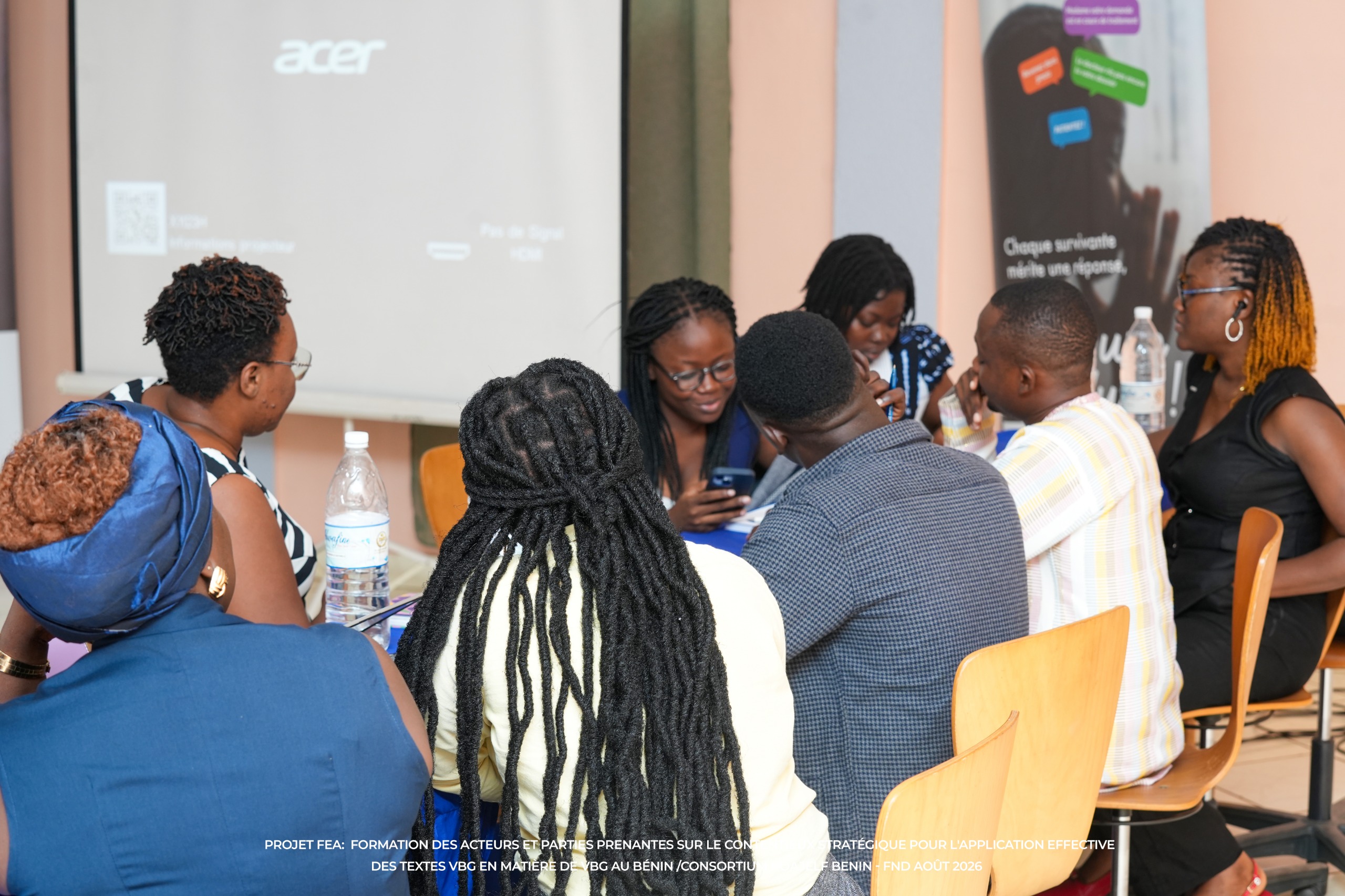
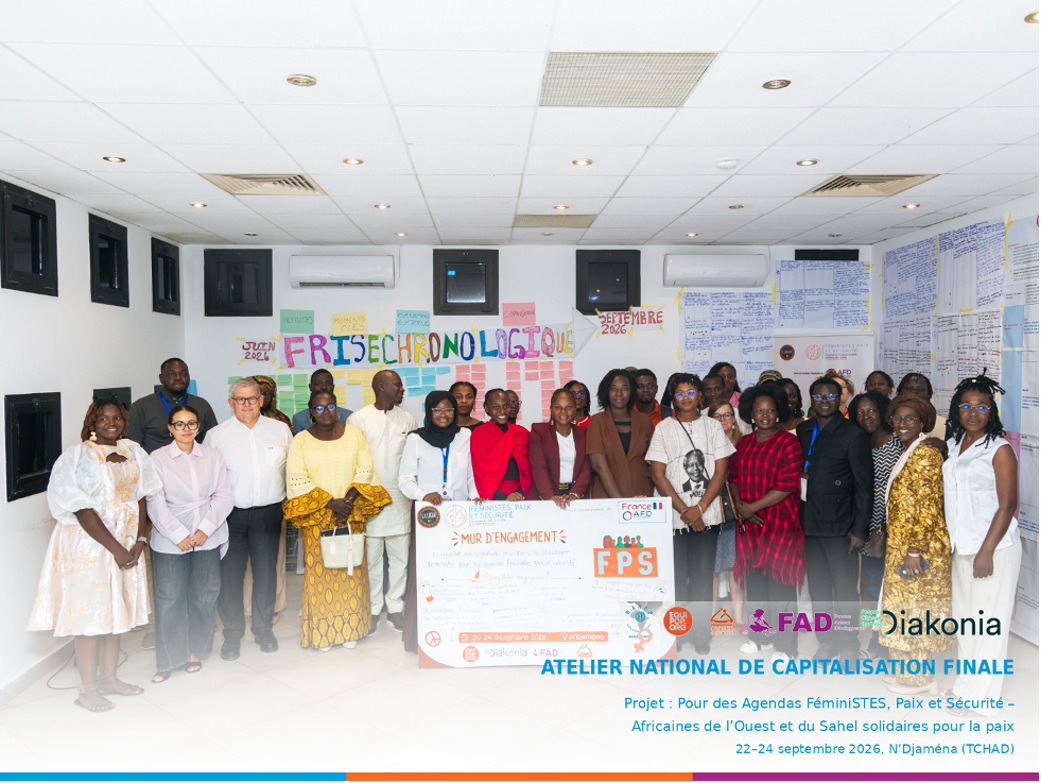
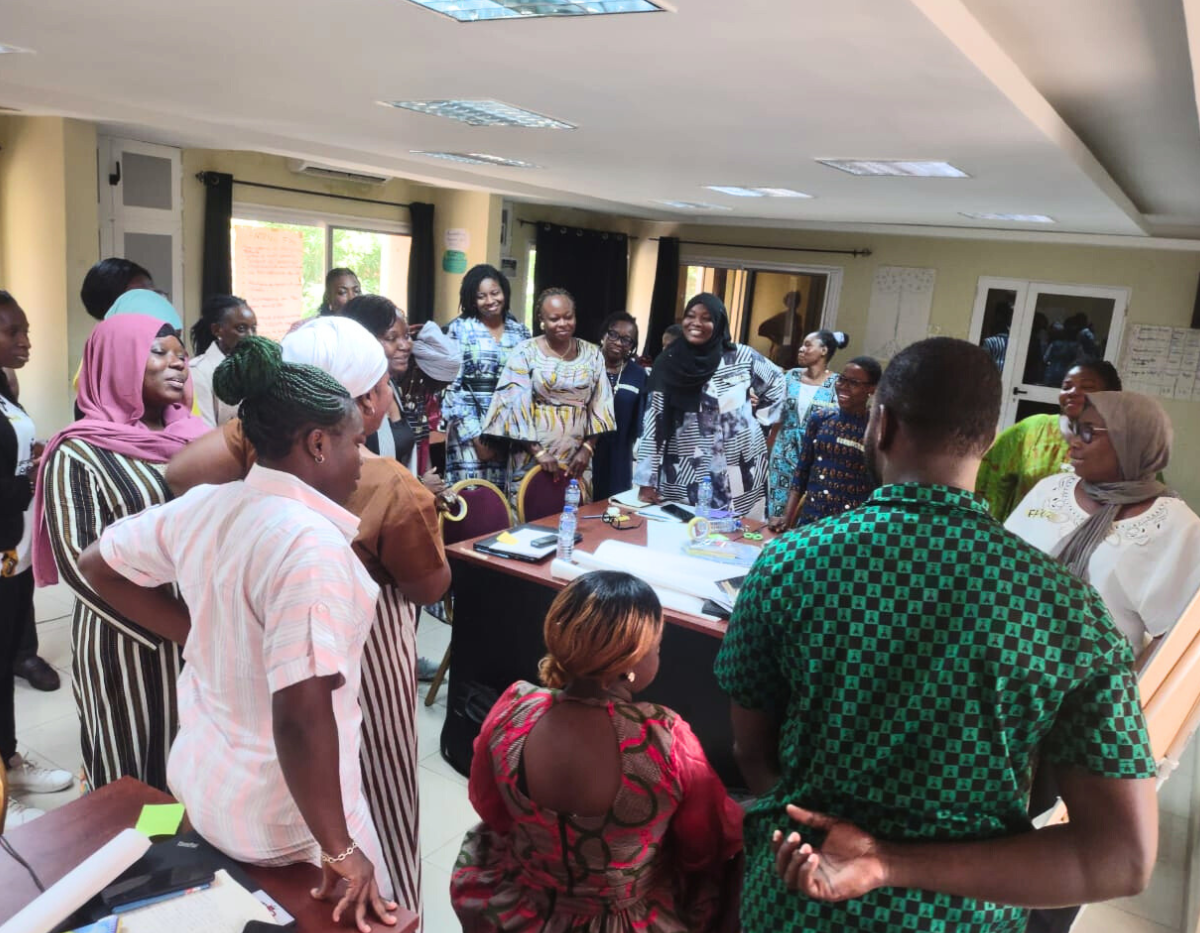
Through an intensive five-day program combining group work, reflective discussions, and role-playing, representatives of the Consortium, Equipop as lead partner and the Gorée Institute, with the support of WANEP-Togo, a national strategic partner, and the recipient CSO Tchowoure Empowerment, led two workshops on feminist approaches and feminist advocacy from February 2 to 6, 2026.
A clear and simple objective: to strengthen participants' capacities, awareness, and commitment to feminist approaches and advocacy for human rights, social justice, and peacebuilding.
Returning to fundamentals, to our history, to better transform
This space, which brought together around 30 activists, provided an opportunity to revisit and explore key concepts such as gender, intersectionality, patriarchy, militarization, the continuum of violence, and feminisms, linking them to the realities experienced on the ground. The discussions also provided an opportunity to recognize the central role, too often and largely silenced, of women in resistance struggles, independence processes, and peacebuilding, while analyzing the historical, political, and social mechanisms that have led to their invisibility and marginalization.
Mastering existing frameworks and instruments to strengthen accountability
The discussions also highlighted the strategic importance of understanding the legal, political, and institutional frameworks at the international, regional, and national levels. These include: the Women, Peace and Security (WPS) and Youth, Peace and Security (YPS) agendas and their National Action Plans, the Maputo Protocol, the African Charter on Human and Peoples' Rights, the Convention on the Elimination of All Forms of Discrimination against Women (CEDAW), the International Covenant on Civil and Political Rights (ICCPR), and the International Covenant on Economic, Social and Cultural Rights (ICESCR).
The adoption of these instruments has emerged as an essential prerequisite for better operationalizing them in daily activities and strengthening the accountability dynamics of states and institutions.
Questioning oneself to ensure consistent and sustainable messages and actions
Beyond the acquisition of knowledge, these workshops provided an opportunity for collective reflection. The discussions allowed us to examine our responsibilities as feminists and activists, and to recognize the existence of privileges that are sometimes difficult to dismantle, even within movements committed to equality and social justice. This awareness emerged as an essential condition for building more inclusive, coherent, and truly transformative movements.
It is therefore important for everyone to question their practices, to unlearn colonial legacies in order to imagine together struggles rooted in the realities of our communities, based on solidarity and social justice.
From analysis to structured and sustainable action for social justice
The participatory work also made it possible to name and recognize the multiple and systemic forms of violence suffered mainly by girls and women, while identifying concrete avenues for resistance and transformation.
These workshops ultimately sparked strong individual and collective commitments, reflecting a shared desire to move from analysis to action, in a self-critical, reflective, and supportive dynamic, resolutely focused on transforming power relations.