Since 2023, Equipop and Campus Groupe AFD, the training center of the French Development Agency, have embarked on an ambitious joint project: to make feminist approaches a structuring lever for reflection, training, and action for actors in development and international solidarity.
1. Two years of collaboration to decentralize knowledge and transform practices
This dynamic is part of France's ongoing efforts to structure its feminist diplomacy, driven by the Programming Law on Solidarity Development and the Fight against Global Inequalities (2021) and by France's feminist diplomacy strategy. As a key player in this policy, AFD has affirmed its desire to become a "feminist agency," which implies a profound transformation of its practices and an increase in the skills of all its teams and partners.
This collaboration is based on the simple and political intuition of Campus Groupe AFD and Equipop that, in order to transform systems and build fairer societies, it is necessary to open up spaces for critical dialogue, share localized knowledge, and strengthen teams' capacities to analyze power relations.
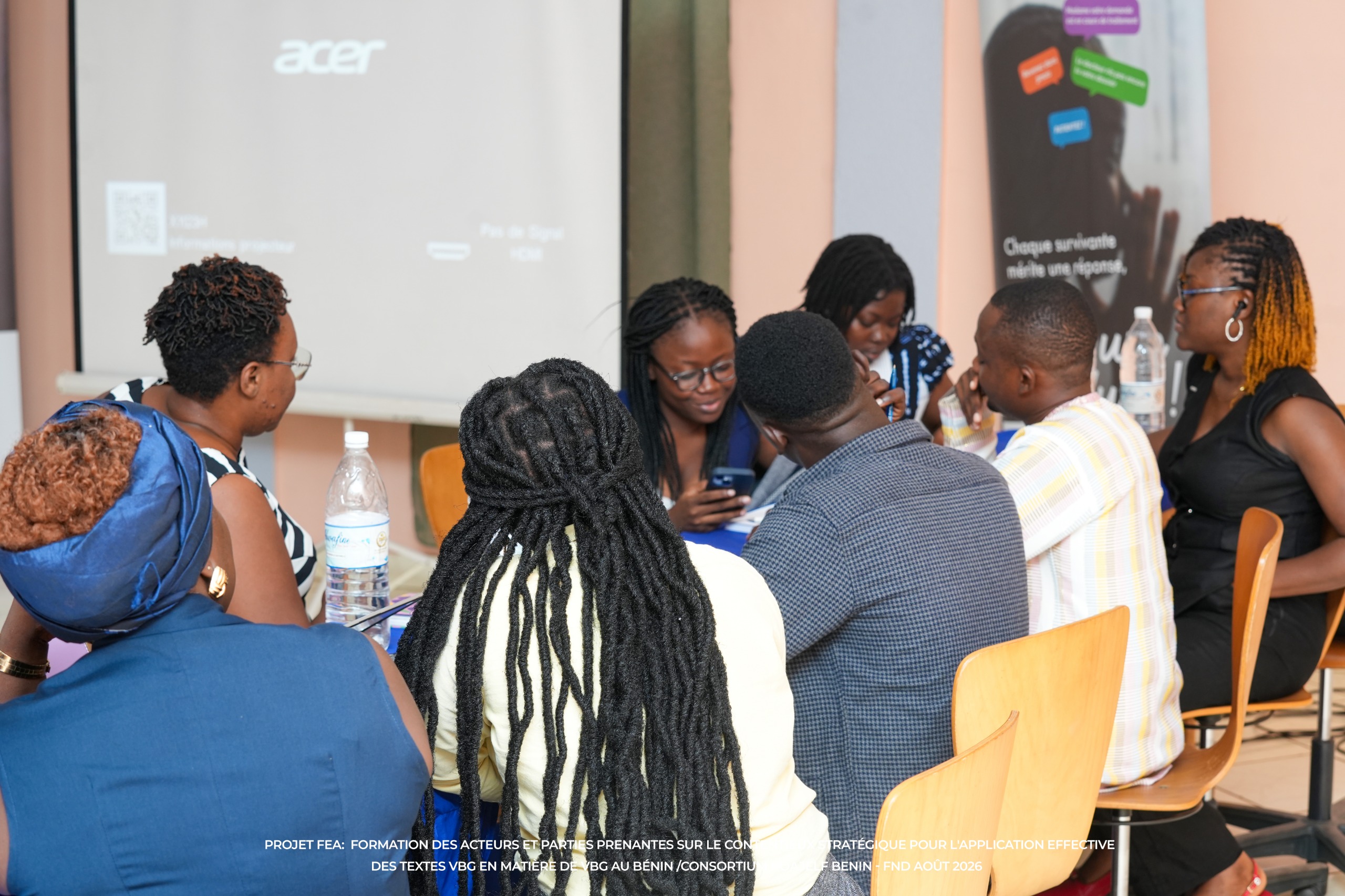
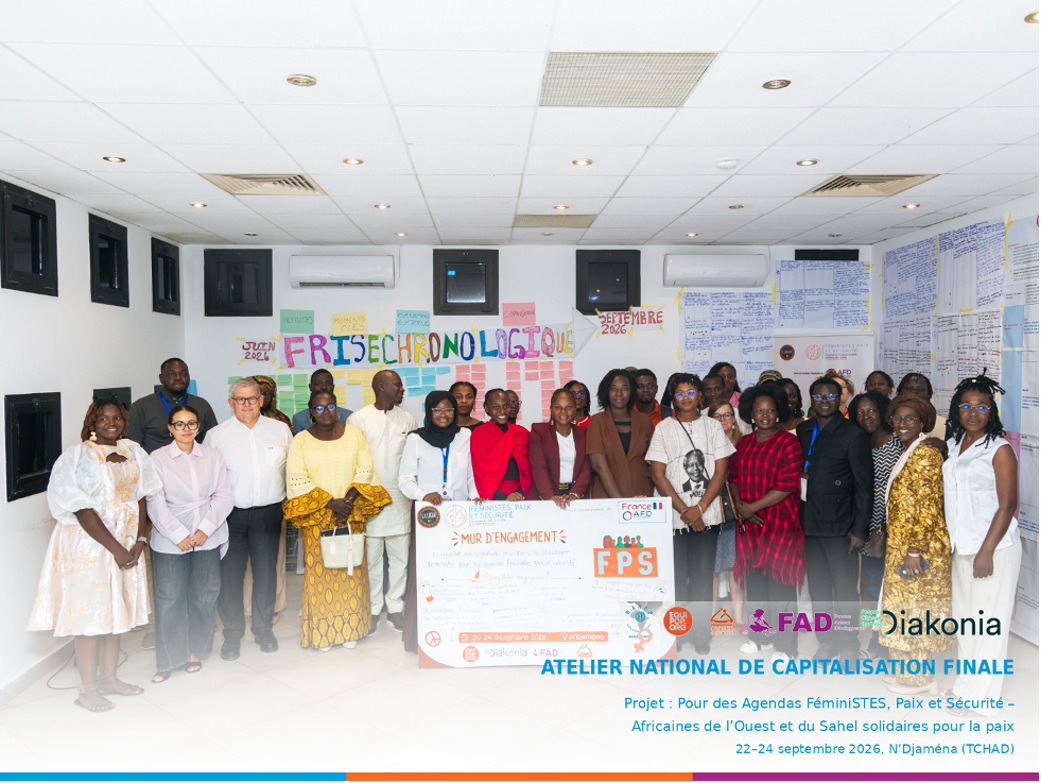
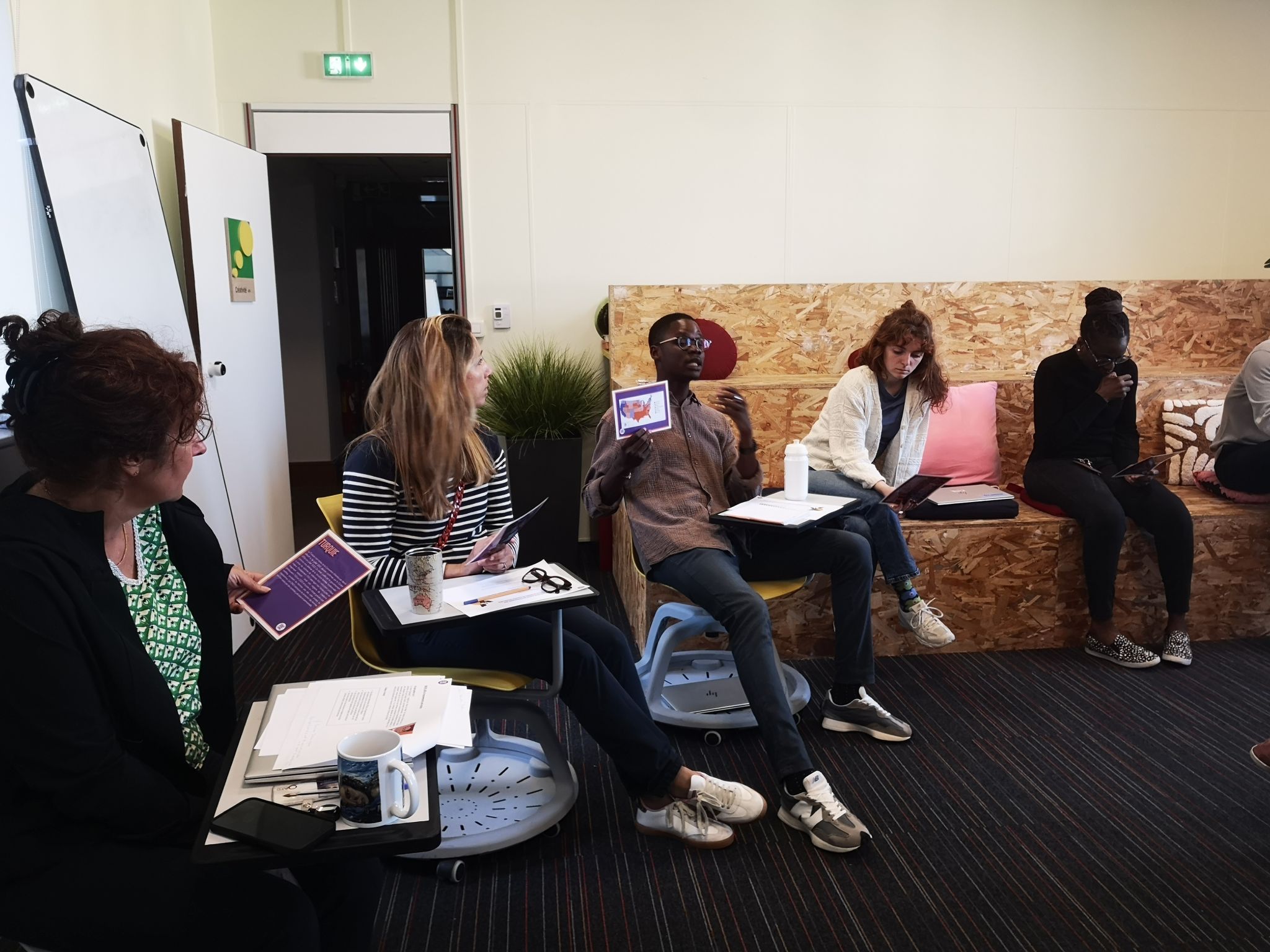
From Cotonou to Marseille, from the PLAY program in collective intelligence to the Mediterranean Talent Academy, Social and Inclusive Business Camp, and Impulse advocacy courses, the teams explored a variety of topics together (feminist leadership, inclusive communication, feminist struggles in the Mediterranean, etc.). They also explored different formats (face-to-face, remote, webinars, round tables) and new tools (such as forum theater and surveying). Each intervention was designed as an experience of transformation, both individual and collective.
This work fits perfectly with the Campus's strategy: learning differently, learning something new, learning together. This partnership demonstrates in concrete terms how these three dimensions are deployed through feminist approaches.
Over the course of these two years, the partnership between Campus AFD and Equipop has made it possible to renew training content and firmly establish feminist issues at the heart of the Campus's strategic debates, while reaffirming that feminist approaches are not an additional module, but a way of rethinking development.
2. Identify the limitations of the system and open up new avenues
This partnership has created new momentum within the AFD Group Campus:
- skills development for teams,
- awareness of the tensions that run through development policies,
- appropriation of key concepts (situated approaches, feminist alliances, power relations, backlash, intersectionality),
- and implementation of teaching practices.
One of the strengths of this partnership lies in the quality of dialogue between the teams. The combination of Equipop's activist and operational roots and the AFD Group Campus's ability to structure and disseminate knowledge has enabled the emergence of a common language.
Above all, it has revealed how much the Campus ecosystem is already in demand for feminist content, and how much these approaches offer relevant responses to current development dilemmas. The partnership also illustrates how feminist perspectives open up new horizons: they make it possible to question systems of oppression, renew notions of development, and imagine fairer alternatives.
With the Campus, we integrate feminist approaches not simply as a methodological enrichment, but as a major institutional responsibility to ensure consistency between AFD's commitments and the practices implemented in its training programs.


The partnership also works to prevent feminist approaches from being exploited: it ensures that they are developed in collaboration with feminist movements, focused on power relations, and rooted in their transformative ambitions.
3. A partnership focused on mutual learning
For the AFD Group Campus, this collaboration has been a real catalyst for internal transformation in three key areas: learning new things, learning differently, and learning together.
It meets a twofold need: to support the development of staff skills in a context where the institution is committed to implementing a feminist approach; and to ensure that partners, service providers, and learners share a common understanding of feminism, which is essential to the consistency of AFD's interventions. This dual requirement is perfectly in line with the Campus's commitment to promoting a different way of teaching and transmitting knowledge, through its three areas of focus:
Learning differently: feminist popular education methods enable theoretical knowledge, lived experience, and professional practices to be linked together. These methods support awareness-raising, the development of agency, and the emergence of more inclusive collective practices.
- Learning together: the partnership promotes the integration of feminist actors into learning spaces (researchers, activists, practitioners, particularly from the Global South), valuing the diversity of knowledge, especially experiential knowledge and lived experiences. This diversity nourishes plural imaginaries, limits the risks of epistemic extractivism, and promotes the construction of transnational solidarity.
- Learning something new: feminist approaches question systems of oppression and offer alternatives for thinking about development and progress, renewing the educational content of the Campus.
The teams were able to enrich their educational content, refine their understanding of structural gender issues, and strengthen their ability to integrate feminist approaches into their programs. Equipop's support has fostered the emergence of more inclusive practices and strengthened team cohesion by opening up spaces where issues of power, positioning, and meaning can be discussed in confidence. As Sophie Derudder, deputy director of the Campus, points out : "The workshop helped clarify concepts and give meaning to words. It helps us understand that feminist struggles are both localized and global (...) Regardless of their initial level of awareness, everyone leaves with the tools they need to question, understand, and take action."
For Equipop, this partnership represents a valuable institutional space for disseminating feminist approaches at the very heart of training and strategic dialogue on development. It offers an opportunity to co-construct experimental formats, bring new narratives to the fore, and foster a demanding dialogue on the tensions that run through the sector. It is also a place where expertise from feminist movements in the Global South can be highlighted, shared, and recognized as essential knowledge for social transformation. In return, Equipop deepens its understanding of institutional dynamics, identifies new levers for action, and consolidates a strategic alliance in a space where feminist issues remain largely marginalized. The Campus plays an allied role by amplifying Equipop's work and providing it with an institutional sounding board. Equipop also benefits from the Campus's training programs, including the PLAY training program in collective intelligence, which has nourished and renewed its own educational practices.

4. A new phase to deepen, resist, transform
This new phase of the partnership, which will last for the next eighteen months, opens up the possibility of furthering the work already begun and giving it real continuity.
It comes at a pivotal moment, marked both by the rise of anti-rights movements and the affirmation of a French feminist diplomacy that needs to be implemented in concrete terms. In this context, the Campus plays a strategic role in disseminating solid feminist approaches rooted in the knowledge and practices of feminist movements.
In a context where anti-rights movements and conservative rhetoric are gaining ground, this renewed collaboration appears to be a strong strategic choice: equipping development actors to better cope with resistance, strengthening feminist solidarity, and expanding the circle of allies capable of promoting feminist ambitions in institutional and international spaces. Through this new cycle, Equipop and the Campus are confirming their shared commitment to pursuing demanding, constructive, and deeply transformative work. This new phase therefore represents a major political opportunity: to train, support, and strengthen AFD teams and partners in order to consolidate alternative narratives, assert rights, and contribute to international solidarity that resists and transforms.
Some publications and resources:
- The IMPULSE program program on the challenges of decolonial advocacy in international solidarity in October 2025;
- The Mediterranean Talent Academy:
- meeting on feminist struggles in the Mediterranean (April 2025)
- workshop on inclusive communication in the Mediterranean region ( July 2025)
- workshop on discrimination and equality issues in public spaces (October 2025)
- The Social and Inclusive Business Camp on a webinar about inclusive and feminist communication to promote female entrepreneurs in West Africa in November 2024;
- PLAY on issues related to feminist leadership in West Africa in March 2024;
- Strategic support from the AFD Group Campus onintegrating feminist approaches into their strategy in September 2024 and September 2025.