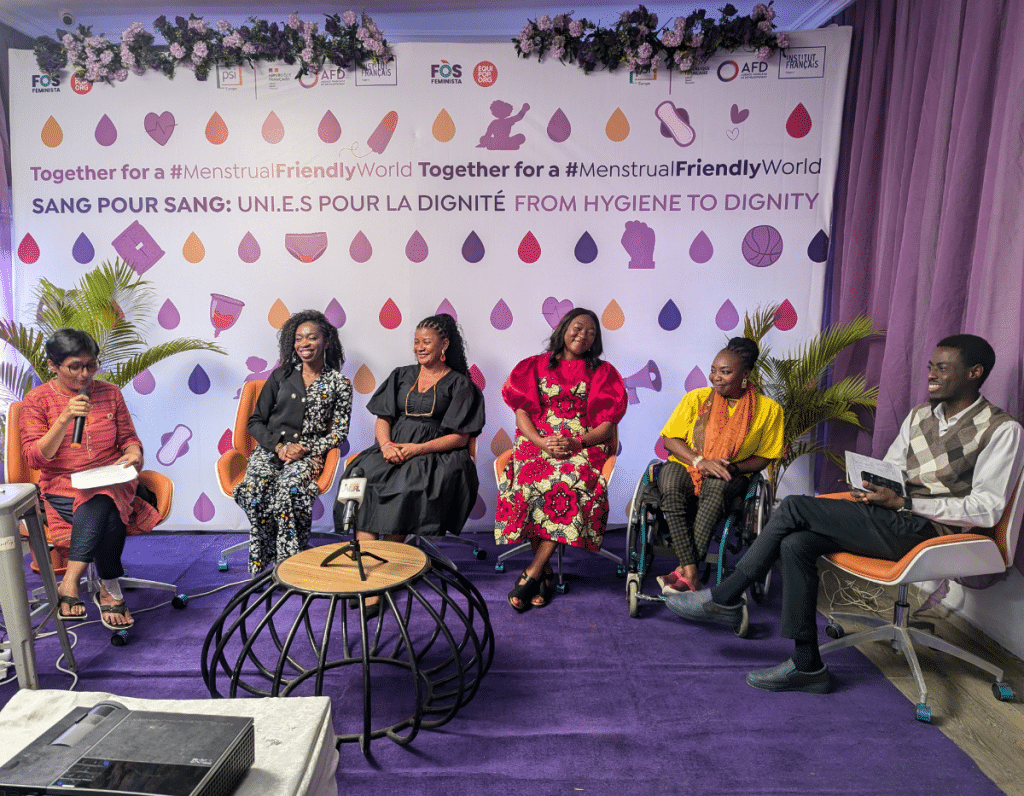
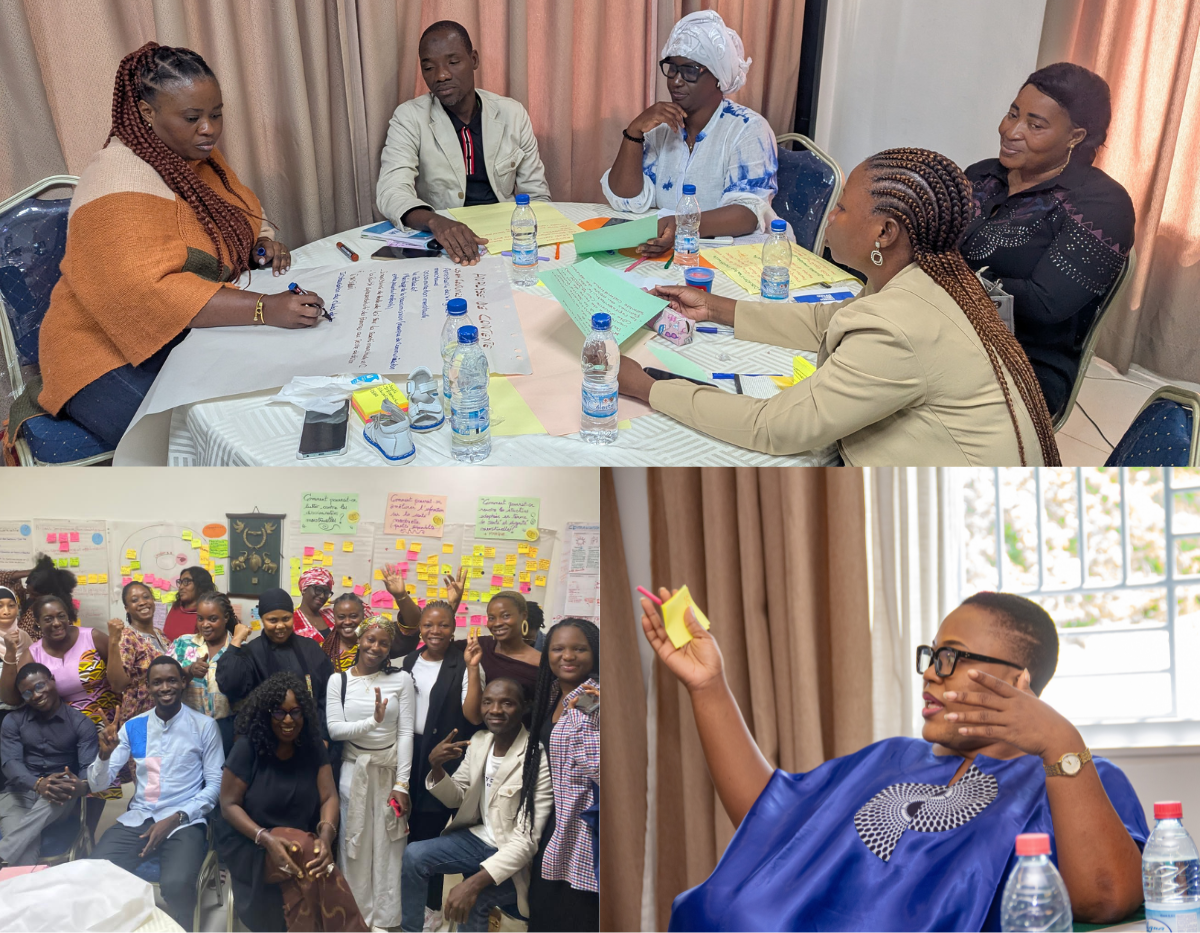
In 2025, Equipop organized a series of three Feminist Social Innovation Labs (Labs) in Côte d'Ivoire, Guinea, and Benin. They brought together activists and representatives of feminist and civil society organizations committed to gender equality and sexual and reproductive health rights.
The Labs were part of the Blood for Blood United for Dignity (SpS) project, funded by AFD and implemented by Equipop, Fos Feminista, Population Services International Europe (PSI-Europe), and the Global South Coalition for Dignified Menstruation (GSCDM).
The SpS project promotes menstrual health and dignity through a rights-based approach in nine implementation countries and two learning countries. One of its specific objectives is to strengthen the capacities of CSOs and feminist activists by giving them access to appropriate resources, including intersectional data, to enable them to influence public policies and programs, including investments related to basic services and infrastructure. The Labs have contributed directly to the achievement of this objective by creating an environment conducive to the promotion of menstrual health and dignity.
Spaces for co-construction and reflexivity
Each Lab lasted several days and focused on participatory methodologies, collective intelligence workshops, and opportunities to share activist experiences. Sessions on mapping actors and sensitive diagnosis of systems of oppression punctuated the exchanges.
The Labs were designed as temporary spaces for reflection, creation, and action. Participants are invited to collectively deconstruct discriminatory social norms, explore practices of social transformation, and propose contextualized feminist courses of action.
The Labs have created unique spaces for meeting, dialogue, and co-construction around menstrual justice and dignity. In different contexts but facing similar challenges: persistent taboos, lack of regulatory frameworks, and unequal access to products and services. They have been catalysts for collective ideas and strategies to transform realities.
Three contexts, one ambition: to shake things up and lead the red revolution
- In Côte d'Ivoire: The "Sang pour sang ensemble" (Blood for Blood Together) project aims to have menstrual health and dignity recognized as a public health and human rights issue by 2026. To achieve this, it is focusing on three areas: integrating menstrual dignity into health and healthy living education modules, making information accessible to all, including people with hearing impairments, and producing data in disadvantaged communities to inform advocacy. Through a digital campaign, community forums, and advocacy meetings, including a dinner with the Minister of Education, the project aims to break the silence around menstruation and make it a national priority.
- In Guinea: The "À nos règles" (Our Rules) project aims to raise awareness of menstrual health in rural areas as a public health issue. Its priorities are to create safe and inclusive spaces to gather the experiences of menstruating people, mobilize a support base of community and religious leaders, and improve access to clear and appropriate information. Activities include discussion groups, awareness-raising video clips, and advocacy meetings called "À table avec nos dirigeant·e·s" (At the table with our leaders), with the aim of transforming social representations and influencing policy.
- In Benin: The "Règle-moi ça" project aims to institutionalize Menstrual Health, Dignity, and Justice (SDJM) as a matter of human rights and social justice. Faced with the lack of a sustainable strategic framework and the political invisibility of menstruation, the project mobilizes three levers: the production of inclusive data to document the lived realities of menstruating people in all their diversity, a change in narrative through artistic and scientific campaigns, and multi-stakeholder mobilization to influence public policy. The goal is to obtain a commitment from the Ministry of Social Action and Microfinance to integrate SDJM into its programs and policies, in particular through the renewal of the National Menstrual Hygiene Program.
These three Labs helped to fuel a collective strategy driven by the partners, at the intersection of menstrual dignity, reproductive justice, and the decolonization of knowledge. They also made it possible to identify common advocacy priorities, strengthen the capacities of local actors, and envisage South-South exchanges between inspiring initiatives.
Through these spaces, Equipop affirms its commitment to feminist dynamics that are deeply rooted, inclusive, and transformative, where the voices of those most affected remain at the center of all action.