
It all began in 2009 with the impetus of a group of young women leaders from West Africa, determined to ensure that they and their sisters were better represented. How do they do this? By organizing themselves into a network to take charge of the issues that concern them. With the support of the ECOWAS Center for Gender Development, they are inaugurating a space where they can come together to undertake regional actions in favor of women and girls. ROAJELF (Réseau Ouest Africain des Jeunes Femmes Leaders) was born. An all-female network made up of members aged between 18 and 35, the organization developed its Senegalese branch in 2011. Its aim: to strengthen the skills and leadership of young women, so that they can play an active role in the socio-economic and political development of their country.
Calling on universities
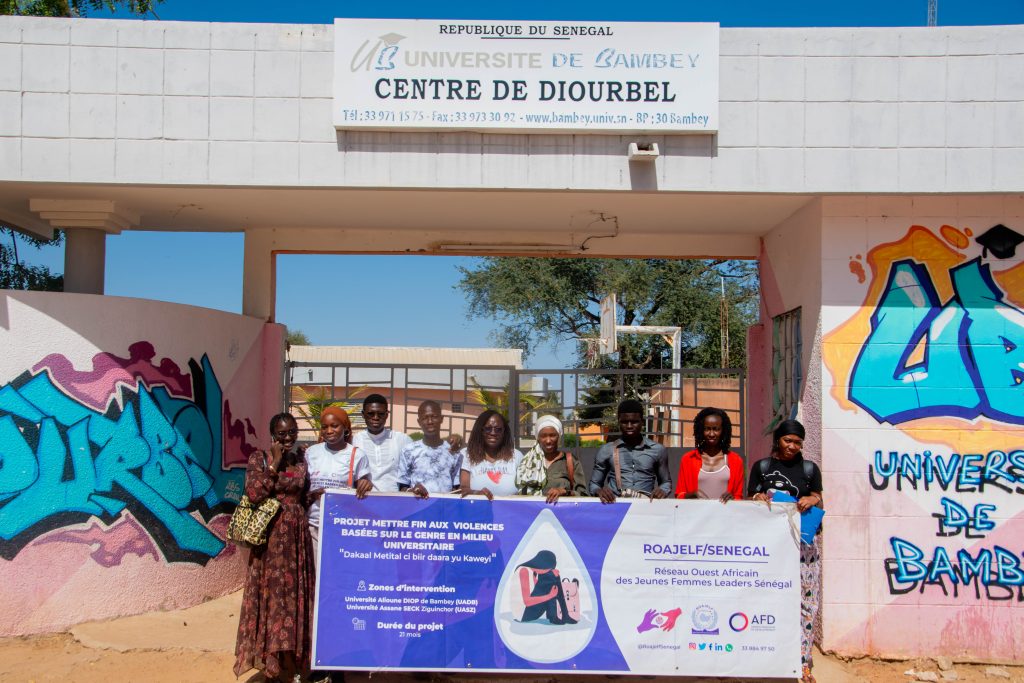
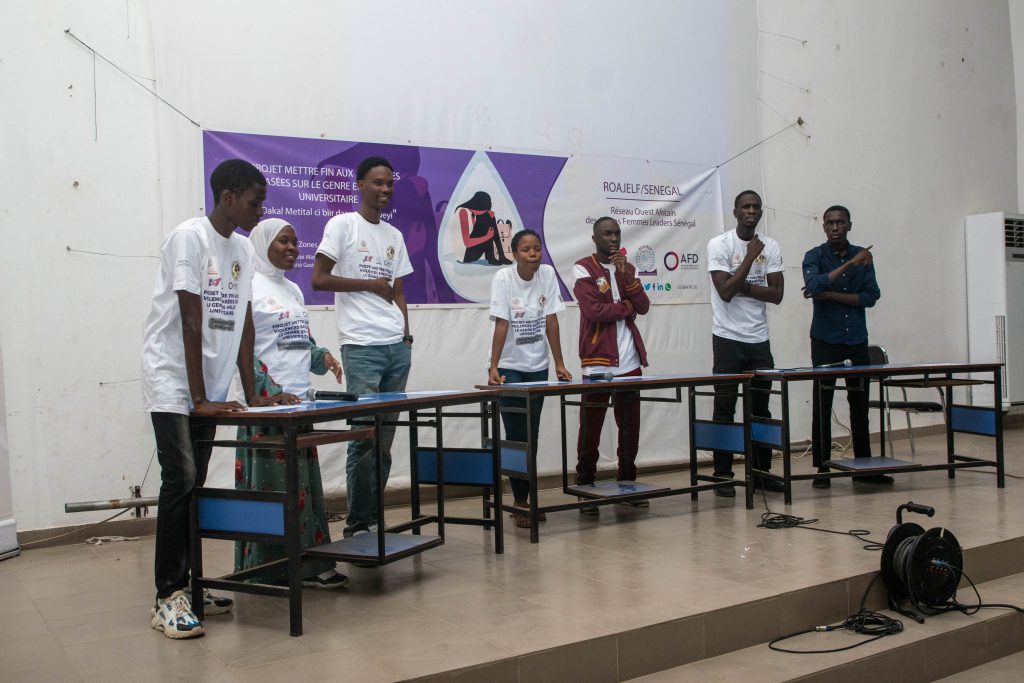
University is a socialization environment that is not immune to gender-based violence. More and more female students in Senegal are dropping out, dropping out of school and enrolling in doctoral programs. In 2021, female lecturers at Senegal's Assane Seck University in Ziguinchor also protested against serious forms of violence, including sexual harassment. To put an end to GBV in the university environment, ROAJELF/SÉNÉGAL, as part of the Feminists in Action project, set up major work in two of the country's universities from 2023 onwards. "We have succeeded in raising awareness and informing students, producing data and, above all, drawing the attention of administrative authorities to the issue of GBV. The term is still overused and passed over in silence, even in university circles", notes Zipporah Ndione, President of ROAJELF/SÉNÉGAL.
" Some of these students may well become the country's future leaders. It ' s vital to raise their awareness of GBV during their studies, so that they can then take informed action ", Zipporah Ndione, President of ROAJELF/SÉNÉGAL.
Inclusive sisterhood
The project led to the adoption of a pact against GBV at both universities. ROAJELF/SÉNÉGAL advocated for a legal framework to protect female students and monitor victims. The project enabled female students to learn about their rights and remedies in the event of GBV. Their strong involvement in capacity-building, listening and advocacy activities reflects one of the Network's main missions: to encourage the participation of young women in political decision-making and governance.
Equipop's sorore support
This support is not limited to financial aspects, but also includes technical and structural support that has enabled ROAJELF/SÉNÉGAL to address the issue of GBV in universities, where it is generally difficult for civil society organizations to obtain authorization to enter. As a result of the project, the organization gained legitimacy, becoming part of a national technical committee to combat GBV and participating in the drafting of an action plan. Thanks to a strategic partnership, the Network has also been able to extend its presence nationwide, with branches now spread across twelve of Senegal's fourteen regions.
-----------------------------
Focus on ... the Political Commitments Monitoring Secretariat
" Our governments make a lot of commitments. But there is no real follow-up on their implementation," laments Zipporah Ndione. In 2022, ROAJELF/SÉNÉGAL launched a plea to set up a Secretariat to monitor political commitments. The first working meetings began in 2023. In 2024, following the election of the new President of the Republic of Senegal, Bassirou Diomaye Faye, the Network drafted a manifesto to reiterate the new government's commitment to being "inclusive and respectful of human rights". "Women's rights are human rights. However, the law on parity is being called into question. Its effective implementation is still struggling in some regions."
-----------------------------
To be continued ...
Senegal's new president has replaced the Ministry for Women with the Ministry for the Family and Solidarity. "We're going to make sure our achievements are preserved, while at the same time waging new battles," says Zipporah Ndione. Supported by Equipop, in May 2024 the Network launched "Our body, our health", a project to combat gynecological and obstetric violence (VGO). An epidemic problem that is struggling to be considered a genuine public health issue.