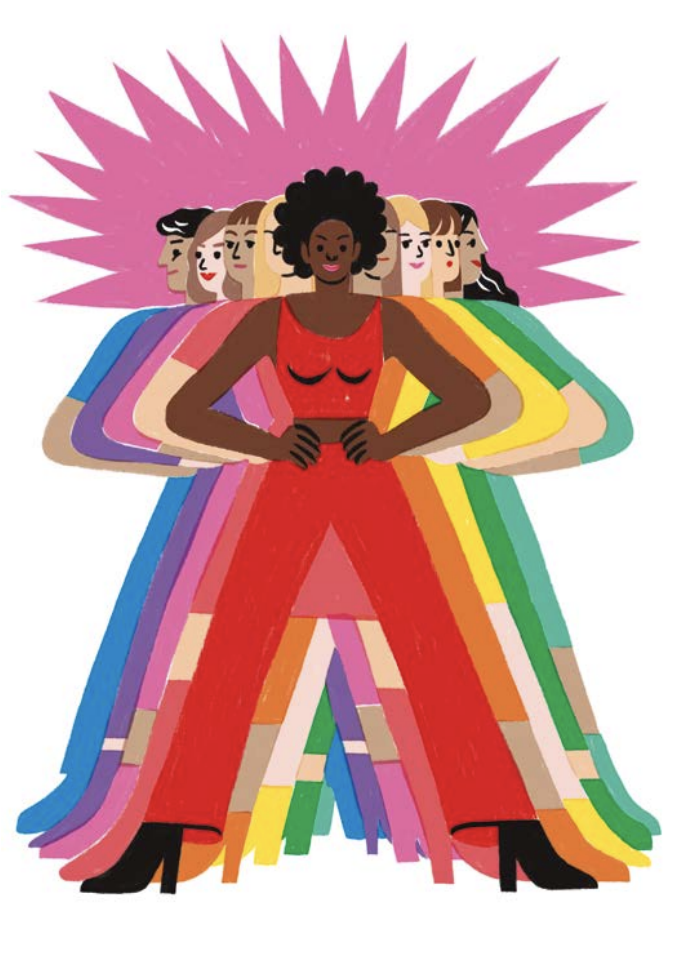
"Rethinking feminist international solidarity policies"
Thematic folder
Rethinking international solidarity and global inequality policies from a feminist perspective
INTRODUCTION
In recent years, wehave witnessed the (re)emergence, in France and elsewhere, of works by thinkers, researchers, and philosophers who deconstruct, from various perspectives, the traditional frameworks that have structured thinking and interventions on gender. This momentum has resulted in a proliferation of essays, articles in academic and scientific journals, podcasts and radio programs, feminist stands and discussions at cultural events, which is slowly spreading to the international solidarity sector.
Thirty years after the Beijing Conference, words such as "power relations," "intersectionality," "feminisms," and "decoloniality," which until recently were considered taboo, are increasingly being heard in the offices of our organizations. Although these concepts have gained recognition over the years in activist and research circles, they have been slow to be adopted in the field of international solidarity, where the less committed terms "gender and development approach" or "gender mainstreaming" have been preferred. gender mainstreaming ."
We owe the emergence of these new perspectives largely to the rise of postcolonial, decolonial, and subaltern studies. subaltern studies ,", which are bringing visibility back to knowledge that has often been sidelined or made invisible and are challenging the coloniality of knowledge. However, the meaning of these terms often remains unclear, and there is a wide gap between theory and practice. The resonance of these concepts in the international solidarity sector is relatively recent, after a long period during which they fueled fruitful reflections in activist and research circles in various territories. Their operationalization in organizational practices and in programs and projects implemented within the framework of international solidarity is part of a gradual process of maturation. This process involves the production of knowledge on a large scale as well as the establishment of mechanisms and tools that reflect the momentum of deconstruction and the political charge of transformation embodied by the concepts mentioned above. In this sense, feminist approaches are central to the definition of international solidarity policies and practices that respect human rights and gender equality.
Through this first report from the Equipop Resource Center, we wanted to seize upon this (re)emergence of feminist ideas and concepts in order to contribute to the emergence of new thinking within the international solidarity sector. We propose some possible answers to these questions: beyond the use of words, how can we rethink international solidarity policies and practices and the fight against global inequalities based on feminist approaches? What place do they have in our international solidarity practices? What criticism of our methods of intervention do they offer, and what lessons can we learn from them? How can we draw inspiration from the approaches and concepts developed by feminist movements, activists, and thinkers to advance the fight against global inequalities at the level of our societies, our sector, and our organizations, and to strengthen the dynamics of international solidarity?

“The use of these words and concepts gives the impression that we are forgetting that we are trying to live in a system that does not want us to live, that we are defending our territories and our lives in the face of constant attacks. We know what our needs are, that's not the issue. It's a question of structures and power relations. Our knowledge is also so colonized that we have to fight to dismantle these structures."
Miriam Nobre, at the conference Decolonial Feminism in Practice: Let's Talk About It! organized by the Claire Bonenfant Chair – Women, Knowledge, and Societies (CCB) at Laval University and the Quebec Committee on Women and Development (CQFD) of the Quebec Association of International Cooperation Organizations (AQOCI), 2022.
This reflection is part of a broader process of questioning the system of international solidarity and its historical and cultural foundations, which we believe is essential in the current context of exacerbated global inequalities and the backlash faced by struggles for the rights of women, gender minorities, and sexual minorities. Since the end of World War II, the international institutions at the heart of this system, and the actors that gravitate around them—including the NGOs they fund—have been committed to pursuing an ideal of "development" that must be achieved in all territories, at all costs. This ideal is associated with "capitalist modernity": economic development, production, GDP growth, job creation, etc. This model fails to take into account the power relations at play, particularly postcolonial relations, and its limitations are evident in the feminization of poverty, the indebtedness of countries in the Global South to the states that colonized them, and the increasing destruction of life itself.
“Feminist and women's movementshave played a major role in these reflections and political developments, combining decolonization and the "depatriarchalization" of thought, knowledge, and structures. They have played a fundamental role in formulating and expressing opposition to the ideological, political, economic, environmental, social, family, and gender orders on which the globalization of capitalism has been based over the last half-century and, under its guise, development."
VERSCHUUR Christine and DESTREMAU Blandine, "Decolonial Feminisms, Gender, and Development: Histories and Narratives of Women's Movements and Feminisms in the Global South," Revue Tiers Monde 2012/1 (No. 209), 7-18, Ed. Armand Colin, 2012.
It is within the framework of this global reflection that we draw upon feminist imaginaries, concepts, theories, and approaches. Today, the galaxy of feminist ideas and movements that has developed over time and across the world from the struggles of women and people from minority groups is rich and complex, bringing together diverse sensibilities that vary according to the issues at stake, the regions, and social and colonial histories. For this reason, we believe it is essential to clarify the feminisms to which we refer in this dossier: we draw inspiration from intersectional feminisms, feminisms of the Global South—particularly Black feminisms, Afro-feminisms, and feminisms of Abya Yala—ecofeminisms, decolonial feminisms, dissident feminisms, and queer and transfeminist theories. We draw on the concepts and approaches that have emerged from these movements, as they all share a common denominator: the rejection of inequality. In this sense, we wish to emphasize the importance of being vigilant in the face of neoliberal discourses that claim to be feminist, which insist on individual responsibility and suggest the possibility of individual improvement without taking into account the structural barriers that underlie this model of capitalist modernity. As Lea Sitkin denounces, "neoliberal feminism promises freedom, but it only replaces one source of coercion (traditional and patriarchal authority) with another (the market)."
“Themultiple crises facing most countries in the Global South call for a broader strategic commitment to counter false narratives and promote solutions in a structurally feminist manner. Systems of oppression and liberation are present in each of us, because we are not disconnected from the world in which we live.”
OXFAM Novib, Feminist influencing basket of resources, 2024.
Through this dossier, we aim to address the challenge of disseminating and (re)visibilizing knowledge and expertise that has yet to be widely translated into French, and to propose a dialogue between these perspectives and those of international solidarity practitioners to consider possible alternatives to the way in which it currently takes shape. We are addressing both those who have already engaged in in-depth reflection on the integration of gender into their international solidarity practices and those who are in the early stages of this journey.
“Since the fall of the Berlin Wall and the advent of the ‘unipolar world,’ the Bretton Woods institutions—the World Bank, the IMF, but also the UN and its many satellites—have played an increasingly important role in establishing a new world economic order, under the official banner of ‘development’ and, more recently, ‘the fight against poverty.’ […] I have attempted to show, following the analysis of some Latin American and Caribbean feminists, that these institutions presided over the neoliberal reorganization of the global system of production and distribution of wealth, to the detriment of women—mainly in the South— while paradoxically legitimizing themselves through the participation of a number of women and feminists in this project."
FALQUET Jules, "Gender and Development: A Critical Analysis of International Institutions' Policies since the Beijing Conference," On m'appelle à régner, edited by Reysoo F. and Verschuur C., Graduate Institute Publications, 2003.
I - When intentions for change encounter limitations and misappropriation: contributions of feminist analyses on the consideration of inequalities in international solidarity policies and practices, past and present
Although the integration of gender into international solidarity practices and policies and the fight against global inequalities has gained increasing support, making power relations and the way they generate inequalities more visible and triggering reflections and initiatives to combat them, many feminist researchers and activists identify major limitations to gender mainstreaming practices in international solidarity.
As early as 1970, Esther Boserup highlighted the harmful effects of development approaches on women economically—particularly women in the Global South, who were the biggest losers in the pursuit of the development model. At that time, researchers and activists noted the absence of women and the failure to take their issues into account in international solidarity practices and policies. This criticism led to the adoption of new strategies aimed at "including" women in development. Several approaches emerged, succeeding or intersecting one another : the integration of women into development (IWD), women and development approaches (WDA), then, at the turning point of the Beijing Conference in 1995, the gender and development (GED) which, unlike the previous approaches, focuses on taking into account gender relations and not only women as a social category.
It should be noted that, on a socio-political level, various reflections during the same period broadened the scope of analyses on women in the Global South. It was in this context that the thematic angle of law was taken into account to analyze, for example, "the legal situation of women and the impact of the coexistence of various written and unwritten codes, which women can use to their advantage, whether in land or matrimonial matters." In the same vein, various positions have been taken by African women in response to "the observation that the production of knowledge and analytical frameworks is still dominated by institutions and individuals from the North and has not taken sufficient account of the contributions, practices, and experiences of the South, leading to a coloniality of knowledge" (Oyèwùmi, 2002; Verschuur, 2009 and 2019; Abadie, 2017; Onibon, 2021).
It must be said that the dissemination of gender approaches and growing support for them, driven by certain civil society organizations, international organizations, and donors, has contributed to significant changes in favor of greater consideration of issues surrounding women, girls, and gender and sexual minorities in all their geographical and cultural diversity, as well asrepositioning their place in the international solidarity initiatives landscape.
However, it must be noted that gender mainstreaming practices in this sector are currently subject to numerous limitations and abuses. In this regard, the wealth of feminist analysis offers us the opportunity to shift our perspective in order to reconsider our practices.
“There is a huge effort to make feminism more acceptable, to reduce it to a catchy phrase or a refrain that fits into a song. The danger of feminism, in the dynamics of mainstreaming, has been its depoliticization, which erases the radical political ideas that underpin the feminist concept.”
McFADDEN Patricia and TWASIIMA Patricia, “A feminist conversation: Situating our radical ideas and energies in the contemporary African context,” Friedrich Ebert Stiftung, 2018.
“Theterm gender has been misused in cooperation programs, where it is still too often considered a buzzword. Rather than discarding it out of boredom, it is imperative, in the face of persistent inequalities, to integrate gender into development as a category of analysis, linked to the categories of class and race, and to recognize the contributions of postcolonial feminist studies to development studies."
VERSCHUUR Christine, "What kind? Resistance and misunderstandings surrounding the word 'gender' in development," Revue Tiers Monde 2009/4 (No. 200), 785-803, 2009.
One of these limitations stems from the institutionalization and instrumentalization of the gender approach itself. Thus, paradoxically, while we see discourse evolving, with gender issues being increasingly mentioned and concepts previously ignored by the international solidarity sector (such as intersectionality or the very concept of feminism) emerging, these concepts are gradually being stripped of their critical and political substance. Several researchers have denounced the co-optation, or "discursive colonization," of activist concepts and their associated depoliticization: "soft feminism," "NGO-ization of feminisms," Eurocentrism of the approaches proposed, and "technocratization of gender." It seems that gender is too often used in the international solidarity sector as a "buzzword" or a "fuzzword" (from fuzz: fluff, or confused, according to Cornwall, 2007). Thus, behind the buzz of words and a changing vocabulary, there is little change in practice and insufficient questioning of the structural barriers that limit our ability to combat global inequalities.
Beyond this criticism of the co-opting of concepts, feminist thinkers, researchers, and activists have identified other fundamental issues that they call for addressing in order to revise our conception of international solidarity. Studies have highlighted how certain programs—while pursuing the goal of gender equality—maintain or even reinforce sexist and racist hierarchies. For example, research on humanitarian assistance to refugees in Bangladesh and Thailand has highlighted how the biases internalized by humanitarian workers have led them to associate and reduce the issue of gender to the simple mobilization of refugee women's participation (thereby perpetuating sexist prejudices in which refugee women are considered more honest and reliable partners than men, and promoting a gendered division ofcare work), or to a necessary transformation of the "traditional" cultures of refugees, perceived as "backward," thus fueling racist dynamics by denying the agency of people benefiting from humanitarian programs and concentrating decision-making power in the hands of NGO staff.
With regard to the recipients of international solidarity interventions, the biases internalized by international solidarity practitioners still lead to the invisibility, or even exclusion, of many people who find themselves at the intersection of different relationships of domination. Without being exhaustive, sex workers, transgender people, prisoners, drug users, people living with HIV/AIDS, people with disabilities, etc. are still often marginalized in the interventions proposed, or are only "targeted" by these programs through biased and often stigmatizing lenses (as evidenced by HIV/AIDS programs, which target "key populations"—including SW, LGBTQIA+ people, and people who use drugs—with a public health approach, to the detriment of more inclusive approaches that would allow initiatives to be focused on the needs and interests expressed by these population groups.
Feminist critics also focus on denouncing the power imbalance between actors within the system. Some therefore propose talking about " powerful parties " rather than stakeholders, in order to stop evading recognition of the colonial nature of power. Faced with a system in which former colonial powers concentrate resources and access to decision-making spaces, it is impossible to ignore the postcolonial dynamics and power relations at play for the actors and inhabitants of the territories where international solidarity initiatives are deployed. The imposition of agendas disconnected from the priorities and interests of the inhabitants of these territories, the sidelining of feminist grassroots organizations and movements and and inequalities in partnerships—regularly described as extractivist to highlight the way in which they extract knowledge and labor without compensation, contribution, or recognition—are thus denounced in unison by those who analyze international solidarity from a feminist perspective.
“Feminist movementsin the Global South are helping to shake up hegemonic orders and fuel renewed thinking and action on the system.”
VERSCHUUR Christine and DESTREMAU Blandine, "Decolonial Feminisms, Gender, and Development: Histories and Narratives of Women's Movements and Feminisms in the Global South," Revue Tiers Monde 2012/1 (No. 209), 7-18, 2012.
These limitations lead to an undeniable conclusion: by maintaining the international solidarity sector in its current state, we will not be able to effectively tackle inequalities. Today, despite efforts and progress made to integrate a gender approach, our sector continues to fuel—even indirectly—the international division of labor, the invisibility of the care economy, and the marginalization of certain categories of people. From this perspective, current initiatives do not allow for a real redistribution of power, with certain groups or individuals still finding themselves marginalized by international solidarity policies and initiatives. Intersectional feminist critics suggest that we rethink these policies and initiatives to make them truly inclusive, rebalance the power relations at play, and combat structural violence in both the Global South and the Global North. To overcome these impasses, we propose to draw inspiration from a "feminism for the 99%"" and to open ourselves up to new perspectives in order to reconsider our practices.
Through this dossier, we aim to address the challenge of disseminating and (re)visibilizing knowledge and expertise that has yet to be widely translated into French, and to propose a dialogue between these perspectives and those of international solidarity practitioners to consider possible alternatives to the way in which it currently takes shape. We are addressing both those who have already engaged in in-depth reflection on the integration of gender into their international solidarity practices and those who are in the early stages of this journey.
“Policies must invest in women, their access to land, opportunities, and freedom. Feminist ideas can improve the quality of life and coexistence, reduce inequalities, and achieve the freedom to live with dignity and (economic) self-determination.”24
AKIYODE-AFOLABI Abiola, "Political participation, feminist organizing, and the creation of inclusive democratic spaces," published in the "Feminist Reflections" series by the African Feminist Reflection and Action Group, December 2020.
II - What feminist approaches have to tell us: perspectives for rethinking our societies, our sector, and our organizations
Feminist approaches and practices offer deeply promising avenues for collectively rethinking our societies and global balances. They must be applied in particular to the field of international solidarity. It is not a question of being satisfied with marginal adjustments, but rather of radically rethinking this field of action through our relationships with other states, supranational organizations, multilateral forums, and civil society (both formal and informal). Beyond the sector of international solidarity itself, these transformations must also, as a matter of urgency, concern the way we think about and shape the world.
TRANSFORMATION No. 1 - QUESTIONING AND REVERSING POWER RELATIONSHIPS TO CREATE A DIFFERENT KIND OF SOCIETY
Colonial debt, the imposition of a single model of "development" and "modernity," structural adjustment policies driven by international institutions, etc. These phenomena are all evidence of the continuing existence of relationships of domination and dependence imposed between formerly colonized territories—and the populations that inhabit them—and the (former) colonial powers.

“What I call decolonial feminism is a feminism that, while recognizing that male domination exists, does not focus on the issue of gender equality.”
VERGÈS Françoise, Podcast Les Nuits de France Culture, September 15, 2019.
The feminist ideas we draw upon in this dossier, with their decolonial and intersectional perspective, invite us to rethink these power relations and consider other ways of building international relations and global governance. This involves examining the deeply unequal system on which the international solidarity sector has been built: rethinking the fight against global inequalities cannot be done without a comprehensive reflection on the very foundations of international relations and the global economic system. It is not just a question of questioning these unequal roots, but of considering, in order to lay the foundations for a fair and equitable society, how to repair past and present injustices and oppression. With this in mind, we invite you to consider the proposed avenues for redressing the human, economic, and ecological crimes that have enabled the establishment of the world system : cancellation of colonial debts, reparations (political, memorial, but also financial) for the descendants of slaves, legal action for the recognition and reparation of environmental crimes (such as the actions initiated following the chlordecone scandal in the Caribbean, supported by feminist collectives such as Koumbit Fanm Karayib), etc.
It should be noted that these positions are not always unanimously supported, particularly among actors in the Global South. For example, the demand for reparations is not necessarily seen as a resilient approach by everyone. There is a tendency to distance oneself from resentment and references to the past, which often leave one open to accusations of victimization. This raises the question of whether the focus today should not be much more on re-examining the very practices of international solidarity, which are steeped in power relations at all levels.
Within the international solidarity sector , this recognition of the power relations at play (and the presence of "powerful parties") calls for a change in the interactions between actors and encourages the recognition of each person's privileges and areas of expression and action. Franco-Cameroonian researcher Rose Ndengue invites us to ask ourselves this question: " How can I use my positionality a lever for the emancipation of the communities to which I belong? " Asking this question, as a "powerful" actor within the international solidarity system, for example as an international organization or donor, implies recognizing one's powers and privileges and exploring how they can be activated to serve stakeholders who do not have access to the same opportunities, the same spaces for speaking out and decision-making. It is therefore a question of exploring how we, as "powerful parties," can adopt a position of allies to grassroots organizations, social movements, and activists and represent, relay, and raise awareness of their interests and demands. It is about invoking the principle of " nothing about us without us " (" Nothing about us without us ).
This stance as allies also invites us to question and evolve our positions, as international solidarity organizations, within funding mechanisms and channels.
Work has been done on this subject and deserves to gain visibility, but above all to be taken up in order to trigger a real redistribution of resources in the sector: how to rethink funding to make it more accessible to movements (including undeclared and/or informal movements), grassroots organizations grassroots and activists in the field? Among their already identified demands are: increasing the availability of multi-year funding, easing the conditions for access to funding, basing funding criteria on the work carried out in the field, streamlining processes, developing networking and knowledge-building opportunities in parallel with funding, and rethinking the participation of grassroots organizations in in the areas of developing and granting such funding, etc.
“Thereis currently a rollback of much of the progress made in the 1990s on women’s rights, against a backdrop of complex economic, social, and political crises. International development organizations that take women's rights and gender equality seriously must do more than they are currently doing to support international, national, and local women's organizations and movements that are developing policy responses to crises unfolding around the world. This means that feminists of different identities and from different places must work in solidarity to protect and advance women's rights."
SWEETMAN, Caroline, “Introduction, Feminist Solidarity and Collective Action,”
Gender & Development journal, Vol. 21, No. 2, 2013.
Thus, at the level of the international solidarity sector, rethinking power relations invites us to reverse the initial premise: it would no longer be a question of developing strategies and funding programs toward a given objective (however just it may be), seeking out suitable partners and dictating the conditions under which they can participate in the initiatives thus developed, but rather positioning ourselves as allies of transnational feminist solidarity.
Finally, at the level of our organizations , power relations must be recognized and addressed. How can we bring about change in our interventions if, internally, some people are subjected to oppression or discrimination, or if certain people are absent? It is by rethinking our recruitment and human resources management practicesthat we can initiate change : implementing fair recruitment practices, encouraging the representation of minority groups within our teams (in terms of gender, but not only, in all their diversity) and ensuring that the working conditions offered to them are fair, equitable, and appropriate. Added to this is the need to promote interculturality in HR practices, taking care not to unconsciously reproduce power relations and asymmetries between people from different cultures. Thus, placing people's well-being at the center of human resources management practices is essential. Once again, within our organizations, we invite you to invoke the principle of self-reflexivity and encourage the exploration of internalized biases that no one can escape. Recognizing the existence of power relations in our organizations also suggests the systematic implementation of transparent mechanisms for managing internal power dynamics and tensions or conflicts. Once again, feminist thinking has much to teach us on these issues.
In his essay How to Organize: A Manual for Collective Action, ecofeminist author Starhawk draws on her experiences in environmental and anti-globalization movements and her spiritual experiences to suggest ways of organizing collective action. She emphasizes the importance for any collective to find a balance between power and responsibility, insisting on the need for power to be linked to responsibility and highlighting the essential nature of transparency, accountability, and the possibility of constructive criticism. She also proposes concrete tools for further reflection on the issue of power in groups, linking it to the notions of trust and communication, the fight against privilege-related inequalities, limits and power sharing, care for those who take on responsibilities, etc.
These proposals, transposed to our organizations, allow us to initiate discussions on the distribution of power and responsibilities, and on the recognition of existing privileges within our teams, which may be linked to issues of gender, age, class, or race, but also to people's social, cultural, and educational capital. Making access to certain positions conditional on possession of a university degree, without opening up the possibility for people with significant personal or professional experience but without a degree to obtain such positions, can reinforce existing power imbalances and privileges. Asking ourselves about the barriers (financial, social, geographical, linguistic, gender, etc.) to accessing academic training and degrees may be a first step toward avoiding this type of bias. Similarly, our organizations are still very often structured around a model of a headquarters located far from the "field" and situated in the "North," with branches or offices located in the field, in the "South." In order to recognize and transparently address existing power dynamics, we cannot ignore questions about the weight of these offices and components of an organization in its decision-making. The numerous studies on the localization of aid, which have gained visibility in recent years, offer crucial avenues for reflection on how to rebalance the scales.
TRANSFORMATION No. 2: RESTORING INVISIBLE AND LOST KNOWLEDGE, PUTTING EXPERIENCE AND LIFE EXPERIENCE BACK AT THE CENTER
Critiques of the coloniality of knowledge and numerous feminist and decolonial works have highlighted how the establishment of the current neoliberal system has been accompanied by the invisibilization, discrediting, and even criminalization of certain practices of knowledge transmission. A prime example is the historical repression of women healers by the Church, supported by European states, from the 14thto to the 17century century, and its continuation in the marginalization of traditional medicine and medicinal knowledge developed by women by the medical establishment in Europe and elsewhere. In response to this criticism, we identify the challenge of rethinking the notion of "knowledge" and, in particular, recognizing the value of experiential and non-professional knowledge.
“Ecofeminisms denounce the primacy of the scientific view of the world, which stems from a colonial and patriarchal project that is becoming increasingly historicized.”
“Old people, whose genders were unreadable, empowered minorities with the help of plants, animals, and spirits, invoking and creating a class of dissidents by choosing the terms of their own existence.”
BAHAFFOU Myriam, Glitter on Compost: Ecofeminism in Everyday Life,
Ed. Le passager clandestin, 2022.
This challenge is once again reflected at various levels. On a global scale, support for the emergence and dissemination of subaltern studies – already underway – and the knowledge they produce seems fundamental. Beyond making this knowledge visible, it is also a question of giving it a real—rather than symbolic—place in decision-making spheres. An illustration of this challenge can be found in the defense of the rights of indigenous peoples, who possess unique knowledge and practices that are crucial for the preservation of ecosystems and the protection of biodiversity. Because of their relationship with the world and with living things, these peoples have developed practices that seem fundamental at a time when we are reflecting on how to deal with climate change. And yet, decision-making processes continue to exclude them, and their rights to land and resources continue to be violated. Integrating these peoples into global climate policies, recognizing their rights and respecting them, seems vital, not only in terms of human rights, but also in terms of safeguarding the global ecosystem at the heart of which the entire human species evolves.
On the scale of the international solidarity sector, these reflections on the concept of "knowledge" invite us to recognize the diversity of perspectives that may exist on the various issues addressed by the sector, and the need to take them into account in policy development and in our practices. Initiatives in the field of risk reduction among people who use drugs, sex workers, and LGBTQIA+ people have demonstrated the vital importance of supporting community associations and movements, and giving people with experiential knowledge a central role in program development and implementation. In this sense, programs in these areas have always relied on "peer work" and strive to enable those affected to work on and lead initiatives that target them, based on the principle of " Nothing about us without us ." This experiential knowledge, which is neither professional nor academic, has proven to be indispensable. In the field of health, initiatives to promote democracy in health are part of the same perspective, making the recognition of the diversity of knowledge registers a crucial issue and inviting us to redefine the value and meaning of "expertise" by giving everyone's experience its rightful place through a process of democratization of knowledge. Thus, in general, organizations, donors, and decision-makers at the heart of the international solidarity system should rethink the place of the people concerned within the spaces where policies and programs are developed, by questioning the existing power relations between practitioners in the sector and the "communities" affected by the initiatives put in place.
Recognizing and valuing non-professionalized knowledge and marginalized knowledge at their true worth also involves facilitating and promoting collaborative work, co-creation, and the construction of collective knowledge, always involving the people concerned. This requires rethinking the way alliances are built and proposing equal partnerships, structured around frameworks of reciprocity and enabling mutual reinforcement. It also involves supporting creative processes and alternative forms of action, advocacy, and influence.
Ecofeminist struggles ecofeminist struggles have much to teach us in this regard, as they have demonstrated, in different places and at different times, the transformative power of creative practices, ofartivism and alternative forms of mobilization.
“Advocatingsimple tolerance of differences between women is a gross mistake. It is a total denial of the creative function of difference in our lives. Indeed, difference should not simply be tolerated, but considered as a source of necessary polarities between which our creativity can flourish.”
LORDE Audre, Sister Outsider: Essays and Statements on Poetry, Eroticism, Racism, Sexism, 1984 (Translated by M. Calise, Mamamelis, 2018).
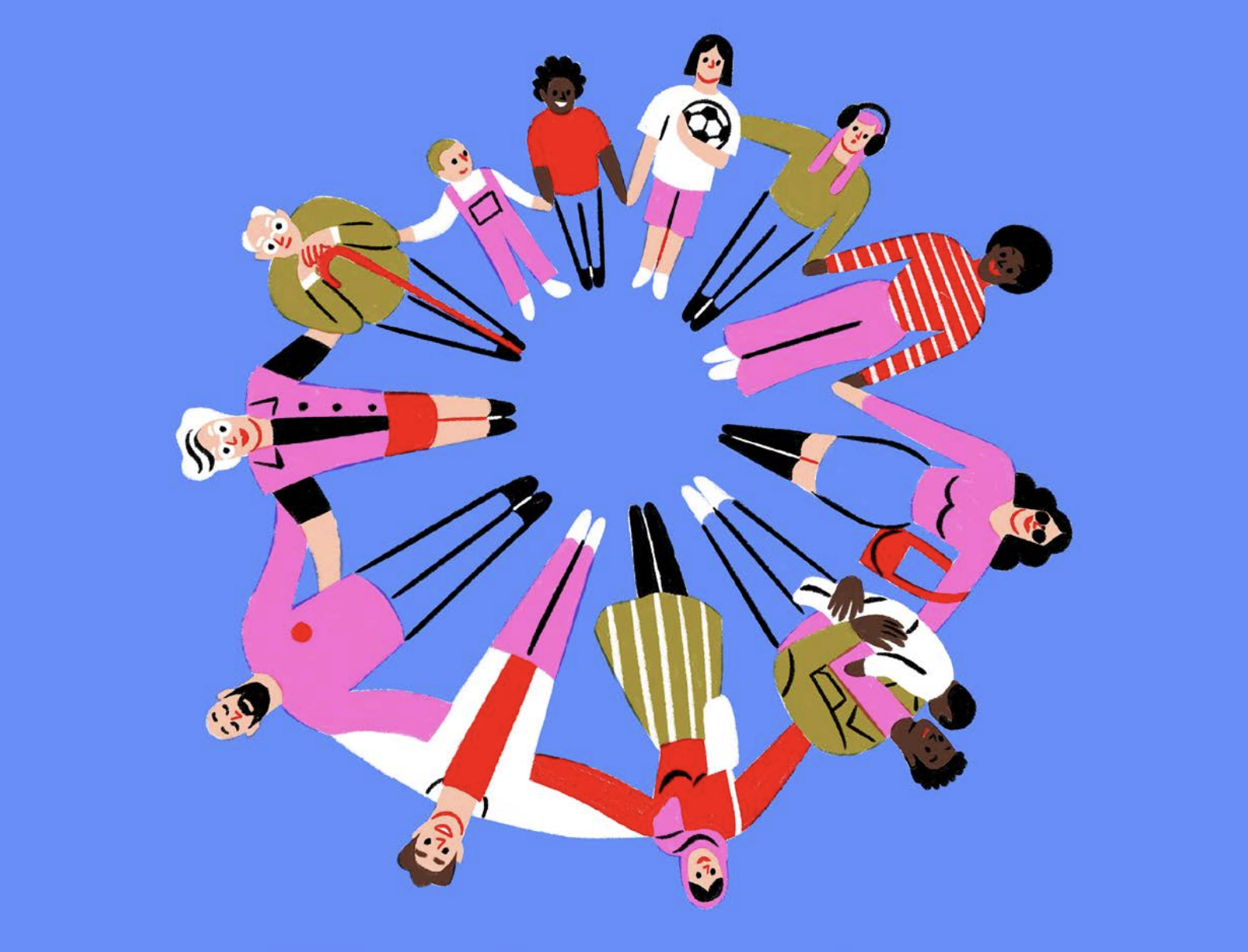
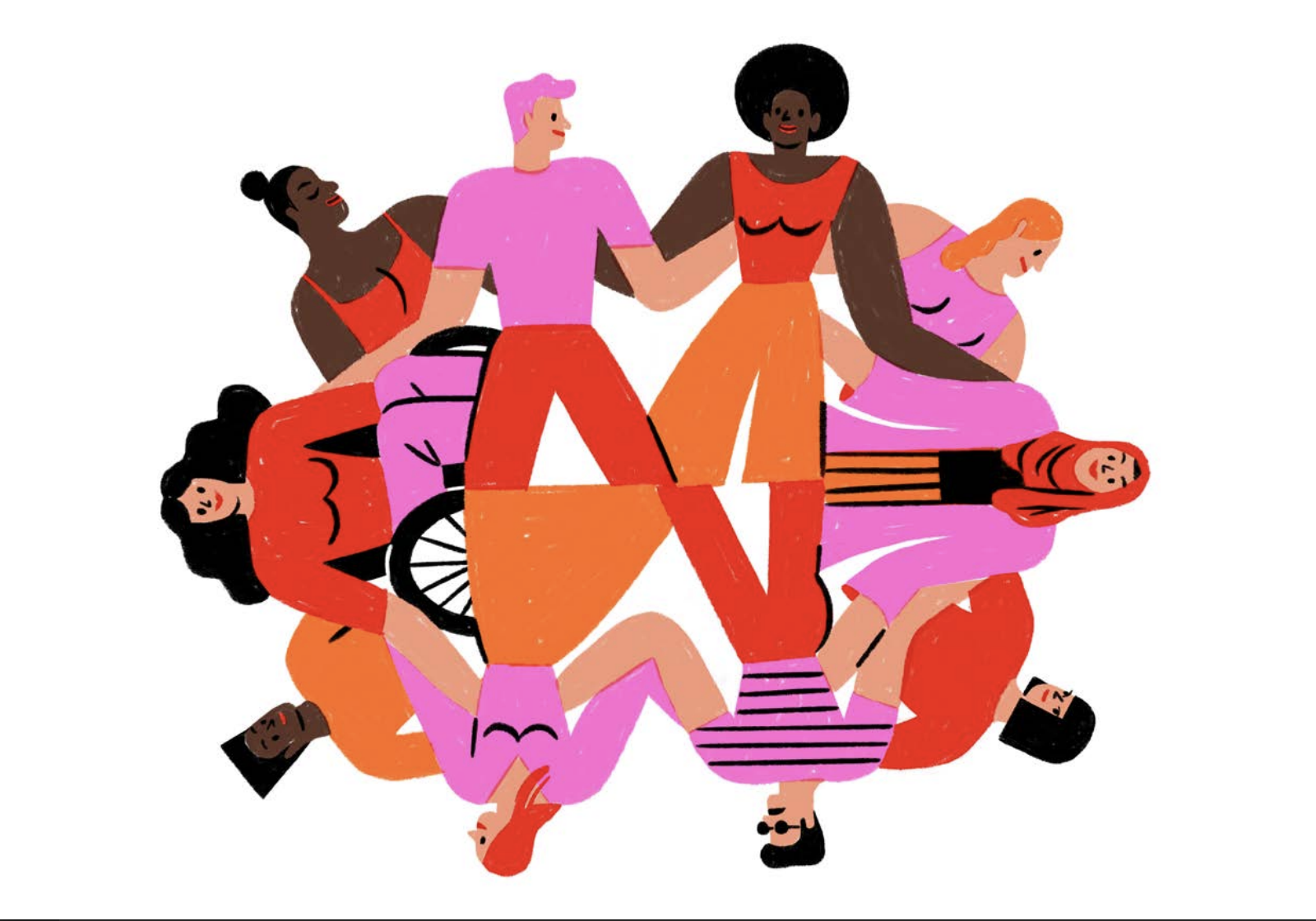
Feminist movements also invite us to value the potential of difference and diversity. This potential can be reactivated by rethinking the spaces for knowledge sharing, training, and decision-making in the international solidarity sector. We therefore propose rethinking our spaces for meeting and reflection by creating truly inclusive democratic spaces, including virtual spaces, which means questioning their accessibility.
When organizing in-person events, considerations regarding the inclusion of people with disabilities, gender and sexual minorities, people from different socioeconomic backgrounds, people engaged in different productive and reproductive activities, or people with diverse cultural practices must be taken into account from the event's design stage in order to ensure its effective inclusivity. Depending on the topics discussed in the reflection spaces set up, the question of opening up the space is a major issue: thinking, together with the people concerned, about non-mixed groups or the modalities of mixed groups chosen, is an approach that can have a real leverage effect on opening up opportunities for speaking and listening, spaces for feminist awareness and experience sharing, or even on the visibility of certain social inequalities and their possible denunciation. Finally, establishing or supporting communities of interest, embodied by feminist schools and feminist solidarity exchange groups, feminist clubs in schools, discussion groups on gender issues in villages, working groups or commissions on feminist issues in political parties, trade unions, or public institutions, etc., are also avenues to explore in order to strengthen participation and accessibility for all to knowledge and the collective development of proposals and initiatives conducive to change: such environments represent a strong potential forincubating feminist ideas and awareness, and would benefit from being developed to exist at multiple levels.
Within our organizations, it seems essential today to rethink how knowledge and expertise on gender are concentrated, distributed, and mobilized within teams: Who possesses this knowledge? What knowledge is recognized? Does it take an intersectional approach into account? What knowledge is disseminated internally on gender issues, and how? Do the people concerned have the space to freely express their views on these issues, their priorities, and their ideas? Have the concepts of gender as addressed within our organizations retained their original political substance—the one given to them by the feminist theorists, thinkers, and feminist activists from various backgrounds who developed them—or have they been co-opted to the point of being emptied of this substance and transformed into technocratic concepts and tools?
Based on the answers we find to these questions, several avenues can be proposed, such as the implementation of initiatives to develop and cultivate a common feminist culture within organizations, reflection on the concentration or distribution of gender expertise within teams, on its transmission and internal training, the dissemination of and access to the work of feminist activists from the Global South, radical feminists, and intersectional feminists, etc.
TRANSFORMATION No. 3: Placing care and mutual aid at the heart of our societal and collective practices
“Forme, ecofeminism represents a set of
movements that advocate for life in all its forms, a
kind of celebration of vital energy against the entire
deadly colonial civilization. (...) This is probably
why care, relationships with people
who are sick, old, dead, or giving birth, are at the heart of
ecofeminist struggles. In fact, this is what it's all about
when we talk about ecology: bodies and their different
ecosystem interactions, their means of cooperation and competition, communities that move, communicate, and organize themselves within specific environments. In short, ecofeminisms construct a politics that works from the body as an element interconnected with the living, open and in constant relation to other species."
Myriam Bahaffou, 2023.
Beyond convening them at the sectoral level, we would like to begin by reminding them that they are essential to the very act of forming a society. However, within our human societies, multiple hierarchies structure our social relationships. Among these, the gender division of labor leads to an overvaluation of productive activities at the expense of reproductive activities (caring for others, maintaining domestic spaces, care work, etc.). Yet the latter are fundamental—once again, to the very survival of our species. Many feminist thinkers have highlighted the essential nature of care: care for the youngest, the sick, the elderly, care for workers engaged in productive activities, and care for our communities as a whole. The COVID epidemic and "crisis" have reflected this. This observation of the interconnections and interdependencies between care activities and other activities, and ultimately the interdependencies between humans, calls on us to rethink the global economic order and—as Marxist and Third World feminists have been pointing out since the 1970s—to establish a care economy.
Beyond efforts to eradicate hierarchies within human activities and among those who carry them out, it is essential to reconsider the dominant value systems that tend to detach the human species from its living environment. Our human bodies interact continuously with the rest of the living world. The climate crisis is inextricably linked to the survival of our species and the other species with which we coexist. We need to identify solutions to combat climate change, restore biodiversity, and repair the damage caused by human activity to our environments. Ecofeminist perspectives invite us to rehabilitate ways of relating,both between humans and within the ecosystems of which we are a part, based on mutual respect and rejecting the possibility of destructive, extractive, and extinctive relationships.
This proposal seems all the more urgent given that we are writing this report in the context of ecocide in various parts of the world, in the face of which the silence (and complicity) of our governments is alarming.
Within the international solidarity sector, our organizations, institutions, and structures have a fundamental role to play in establishing relationships based on care and protection of life. We must recognize the undeniable continuum that links the global inequalities we wish to eradicate and the structural violence that is perpetuated by the world system. We must recognize the links between capitalism, imperialism, extractivism, heteropatriarchy, and racism, with the aim of dismantling one system and rebuilding a new one that is protective and free from violence. As actors of international solidarity, and taking into account our position as "powerful parties," we have a role to play in raising awareness of certain issues and social movements about which we often remain silent. How can we advocate for conflict resolution and world peace if we do not support those who denounce the extreme violence of certain states: Israel's genocidal violence in Palestine, police violence, violence and abuses by state armed forces, violence within the prison system, etc.? How can we advocate for equality and freedom for all if we do not take a stand in favor of the rights and demands of indigenous peoples, the struggles against extractivism, and other environmental struggles that fight against the annihilation of life? How can we denounce social inequalities if we do not support movements for workers' rights (including the most marginalized workers, among whom are sex workers), movements fighting against precariousness, and anti-racist movements around the world, including in the "North" territories often ignored by our own policies and practices to combat inequality? How can we defend gender equality if we render the struggles for LGBTQIA+ rights invisible on the pretext that they are divisive or that "anti-gender" movements will distort our message? Finally, how can we support everyone's right to health, nutrition, and life without questioning the systems of production, export, and consumption that feed us, the devastating impact of certain agricultural policies on those who work the land, on rural environments and those who inhabit them, and on trade practices that perpetuate the postcolonial exploitation of certain territories?
As actors of international solidarity, we call for the establishment of genuine solidarity links with these various social movements, from a transnational perspective. We propose to embody the concept of "transnational feminist solidarity," without depoliticizing it or emptying it of its substance, and to take a stand and stand together to defend freedom in the face of the capitalist, imperialist, and racist forces that structure the world. These forms of solidarity can once again take the form of alliances: the most powerful organizations, established within the system of international solidarity and whose place and legitimacy are recognized by other actors—notably states—can support the most precarious associations or movements, in particular by taking on the mental and financial burden of analyzing the security risks to which their members may be exposed and by putting in place support and protection mechanisms.
“Feminist genealogies have drawn attention to three important elements in our definition of transnational: 1) a way of thinking about women in similar contexts around the world, in different geographical spaces, rather than all women around the world; 2) an understanding of a set of unequal relations between and within peoples, rather than a set of traits embodied by all non-US citizens (particularly because US citizenship continues to be based on a white, Eurocentric, and heterosexist regime); and 3) a reflection on the term "international" in relation to an analysis of economic, political, and ideological processes that would therefore require taking critical anti-racist and anti-capitalist positions that would make feminist solidarity work possible.
ALEXANDER M. Jacqui and MOHANTY Chandra Talpade, Feminist genealogies,
colonial legacies, democratic futures, 1997.
Finally, within our own organizations, issues of well-being, care, and safety must also be given a central place. Promoting the care of teams (including those in "front-line" positions, or more precarious positions such as internships or volunteer work), putting in place measures to support access for all···to psychosocial support and mental health care, and recognizing the contributions of "trauma-informed" approaches. trauma-informed " approaches, are all avenues offered to us by feminist thinking. The difficulties encountered by those engaged in the fight against global inequalities, whether through professional activity within an NGO, as grassroots activists, or as researchers, are numerous and well established. Activist or professional burnout is often perceived, even normalized, as an inevitable setback in the commitment to social justice. Feminist organizations such as the Association for Women in Development (AWID), the Feminist Activism Emergency Action Fund, and the FRIDA Feminist Fund addressed this issue several years ago, proposing a rethinking of this paradigm. " Sustainability means being able to do the work we love while feeling fulfilled and happy in all areas of our lives. It means feeling safe, connected, recognized, respected, and appreciated for who we are as much as for what we do." This observation by activist Jane Barry should prompt us to question the practices of our organizations and what they mean for teams in terms of the difficulties of combining activism and community involvement with personal fulfillment : How do our organizations support their members in finding this balance? How do they protect staff who may be exposed to risks to their safety and health because of their involvement in the organization or for other reasons? How do our organizations make it possible to realize the idea that "taking care of oneself is a political act" and do they agree to play an effective role in this project? Do our human resources practices allow everyone to have access to healthcare, time for projects and activities outside of work, time for family, rest, leisure, and social networks? What definitions of "security" do our organizations use, and do they encompass issues such as physical and mental health and well-being, protection from exclusion, access to justice, or protection from certain forms of violence specific to certain social groups, including gender and sexual minorities? Adopting an integrated approach to safety is a first step to consider in order to take care, individually and collectively, of the people involved in our organizations. These reflections on organizational practices that promote well-being, like all reflections on gender issues, must not escape vigilance regarding the risks of distortion and emptying them of their political substance. The shift from radical well-being to personal development has too often been made and denounced by thinkers and researchers such as Zineb Fahsi, Camille Teste , and Aisha Harris.
CONCLUSION
SOften caught up in the urgency to act, and faced with the scale of inequalities that permeate the patriarchal, postcolonial, and capitalist world in which we live, we, as international solidarity organizations, lack the time to take a critical, political, and historical look at our practices. By recognizing the pitfalls our sector can fall into, we wish to collectively participate in its transformation.
This dossier provides a space for further reflection on this issue. It brings together feminist perspectives—drawn from both activism and research—with practices in the international solidarity sector.
It is an invitation to self-reflection, to recognizing the internalized biases that shape us, and to bringing to light thoughts and tools derived from feminist and decolonial approaches.
Feminist researchers, activists, theorists, and philosophers have been calling our attention for a long time. Their analyses and courses of action offer valuable insights for developing our approaches. Listening and using these resources is an essential first step.
This report does not claim to be exhaustive. It opens up avenues for exploration, proposes tools, and invites further work to strengthen international solidarity. Rethinking its effectiveness through the lens of social justice is not simply a desire, it is a necessity, on which the very justification for the existence of our structures and initiatives rests.
Note: All references are available in the complete downloadable file.
Illustration credits: Anina Takeff