How can we demonstrate the social changes that our work achieves? All development practitioners share this methodological challenge. Quantitative approaches that are helpful for activity programming and resource management have many biases, such as a limited ability to understand how stakeholders evolve during a project.
Equipop and its partners aim to change the relationships, practices, and images that both drive and reflect civic and political mobilization. In recent months, Equipop and its partners have worked on defining desirable changes, observing them in detail, debating them, and working out how to account for them.
In 2019, Equipop began an important project to mainstream a change-oriented approach to project monitoring into its strategies. Inspired by proven methodologies, such as impact mapping, and supported by F3E,1 a French practice-and-impact evaluation network, Equipop has developed an approach to monitoring projects that is suitable for its partners and fits well with priority project focus areas, such as youth engagement, institutional commitment, multi-actor dialogues, and innovation.
THE CHANGE-ORIENTED APPROACH TO PROJECT MONITORING FROM A TO Z
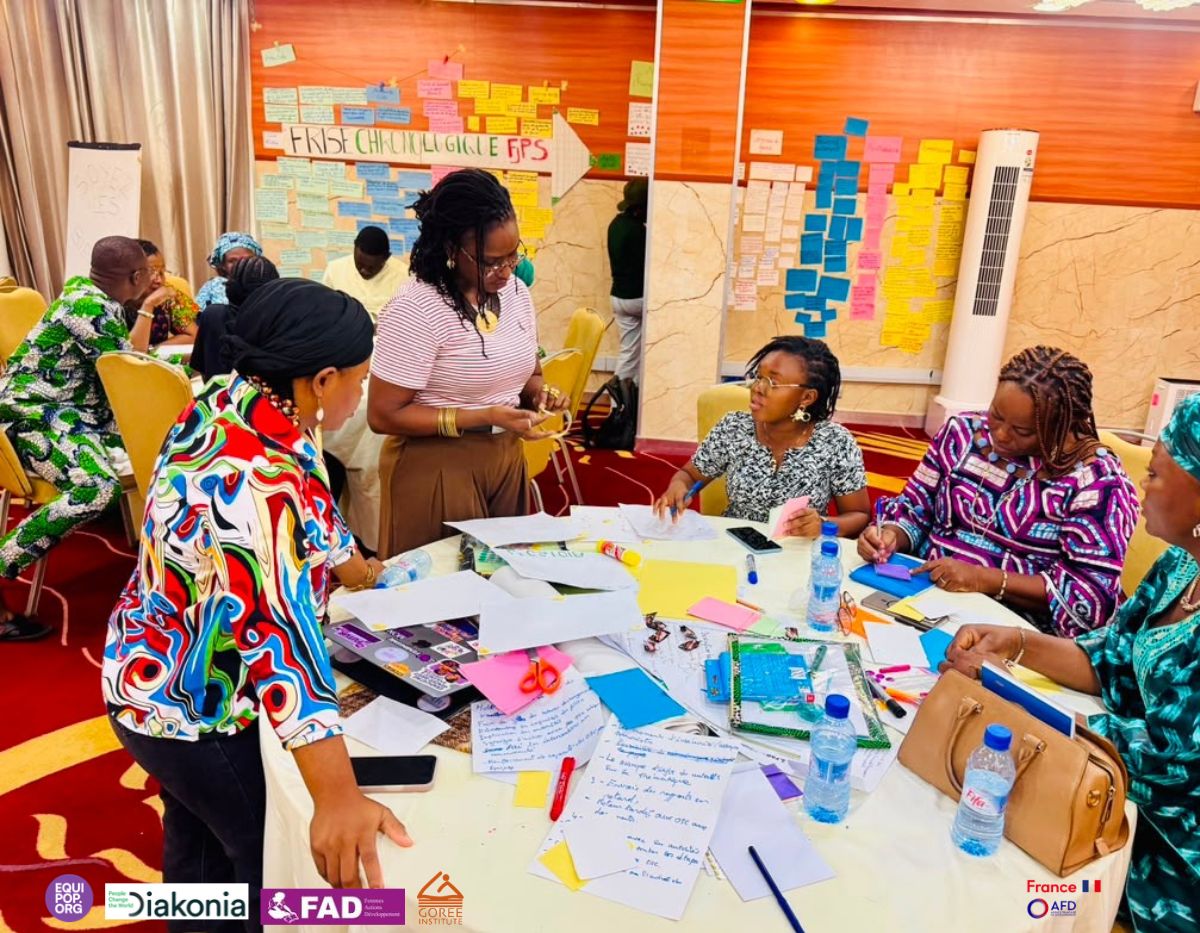
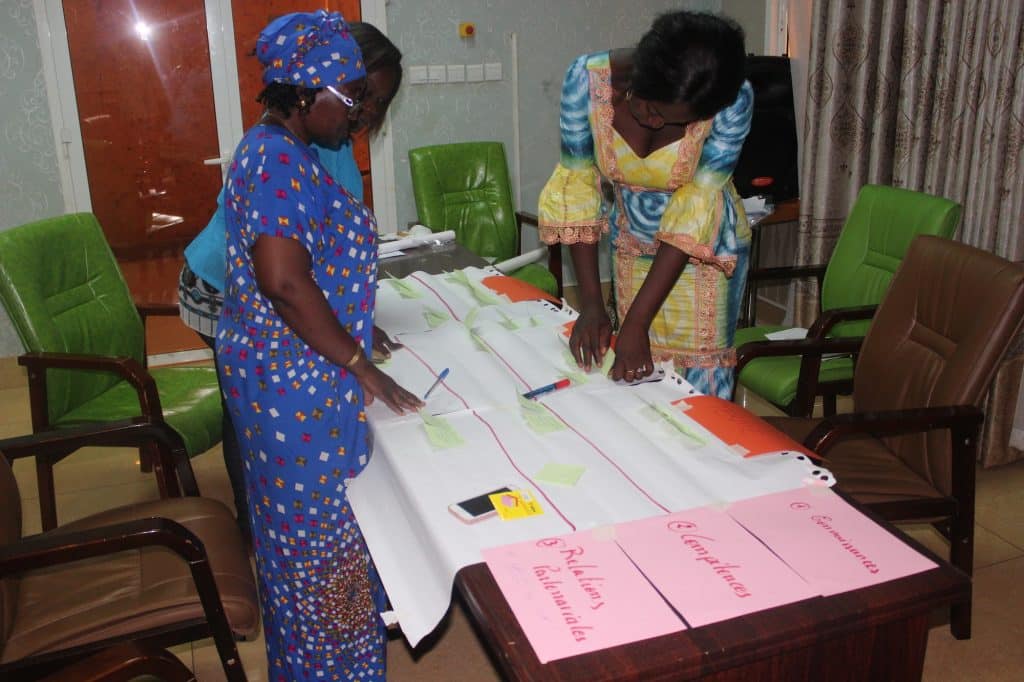
The change-oriented approach to project monitoring that Equipop integrated into its Change Lab and Fondemsan projects allows participating organizations to unite around a common vision of change and target their key project partners, such as local politicians, influencers, or other activist groups, whose involvement would be strategic. The participating organizations set out pathways towards change for each strategic partner, using the pathway as a tool to guide and adjust project activities. In this way, the organizations can ensure each action contributes to creating the expected – or hoped-for – changes. Once the organization’s project management team has put a pathway in place, the team begins to observe and record the small, everyday changes that constitute significant impacts over time; for example, the forging of relationships within a group of young women and their ability to help each other. This kind of analysis is key to understanding how change becomes possible. The team observes small changes that must be compared in turn with what project stakeholders see, because their feedback is crucial. This openness to feedback from the public and from project allies allows the project team to adapt its work and strategies as the project progresses. Mid-way through a project and when it ends, the project team compares actual changes with the change pathway initially imagined. By aggregating observed impacts, practitioners can observe project impacts on different, inter-connected levels, such as the individual, group, or an area. Change-oriented project monitoring also illuminates how changes occur and the strengths of related actions or strategies. In this way, such monitoring also serves as an excellent source of knowledge capitalization.
BEGINNING CHANGE-ORIENTED PROJECT MONITORING
After experimenting with this changeoriented approach to monitoring projects, the following initial results emerged:
1. Increased stakeholder ownership of the desired societal transformations. Sometimes the meaning of a project is overlooked, or imposed by an external logic, particularly that of donors. Beginning with project-launch workshops, the change-oriented approach to project monitoring encourages group discussions about the meaning and relevance of project objectives.
2. Better consideration of the project ecosystem. Social and political mobilization projects do not take place in isolation; instead they involve many political, traditional, religious, media, group, and citizen actors. Change-oriented project monitoring helps practitioners take all these actors and interrelationships into account; it also strengthens partnerships.
3. Improved project management. Teams managed to go beyond simply monitoring activities to assessing and analyzing project impacts. Such analyses are very useful for understanding how different project actors react or interact, how they take ownership of the project, and how practitioners can adjust their activities to adapt to an evolving situation.
4. Reinforced dialogue between project stakeholders. Change-oriented project monitoring requires periodically analyzing and sharing observed changes, providing project leaders with insights that enable them to adjust their actions. Change-oriented project monitoring is experienced collectively; it requires time for open dialogue between stakeholders in order to bolster support for the vision of change and to encourage everyone’s involvement, especially that of young people.

Equipop is preparing the next stage of using this change-oriented approach to project monitoring by developing a methodological guide based on feedback from participating organizations. The guide will highlight the main challenges of monitoring citizen-mobilization projects for sexual and reproductive rights and health. Equipop will also continue working with donors, presenting the benefits and deployment of this new project monitoring method.